Retiring WELL!

After what seemed like an endless year, I finally made the trip to Noosa, Queensland in early March. 

It was sad this time. My three aunts who moved from Sydney almost 30 years ago are no longer with us. My dear aunt Margaret and singing partner of the ’70s, was the last to pass away in August last year. I usually stay with my uncle-in-law Hans (he married Margaret’s sister Poppy), and he lives in a retirement village.

Hans’ calm, serene retirement village

Hans and I get on well. He loves my cooking, supports the Sydney Swans (only when they’re not playing against the Brisbane Lions!), and we laugh a lot. This time, I bought him a smartphone as I thought it was about time he had one. Amazingly he adapted to it quickly, though found it very frustrating at first.

Over the years, I’ve enjoyed long walks along the Noosa River, using the park exercise equipment provided along the way. I especially love the walking tracks in Noosa National Park. There’s also Noosa Heads along popular Hastings Street, with its beautiful riverfront cafés. Sitting there with nothing else to do but sip a cappuccino in a huge mug remains one of my delights. 
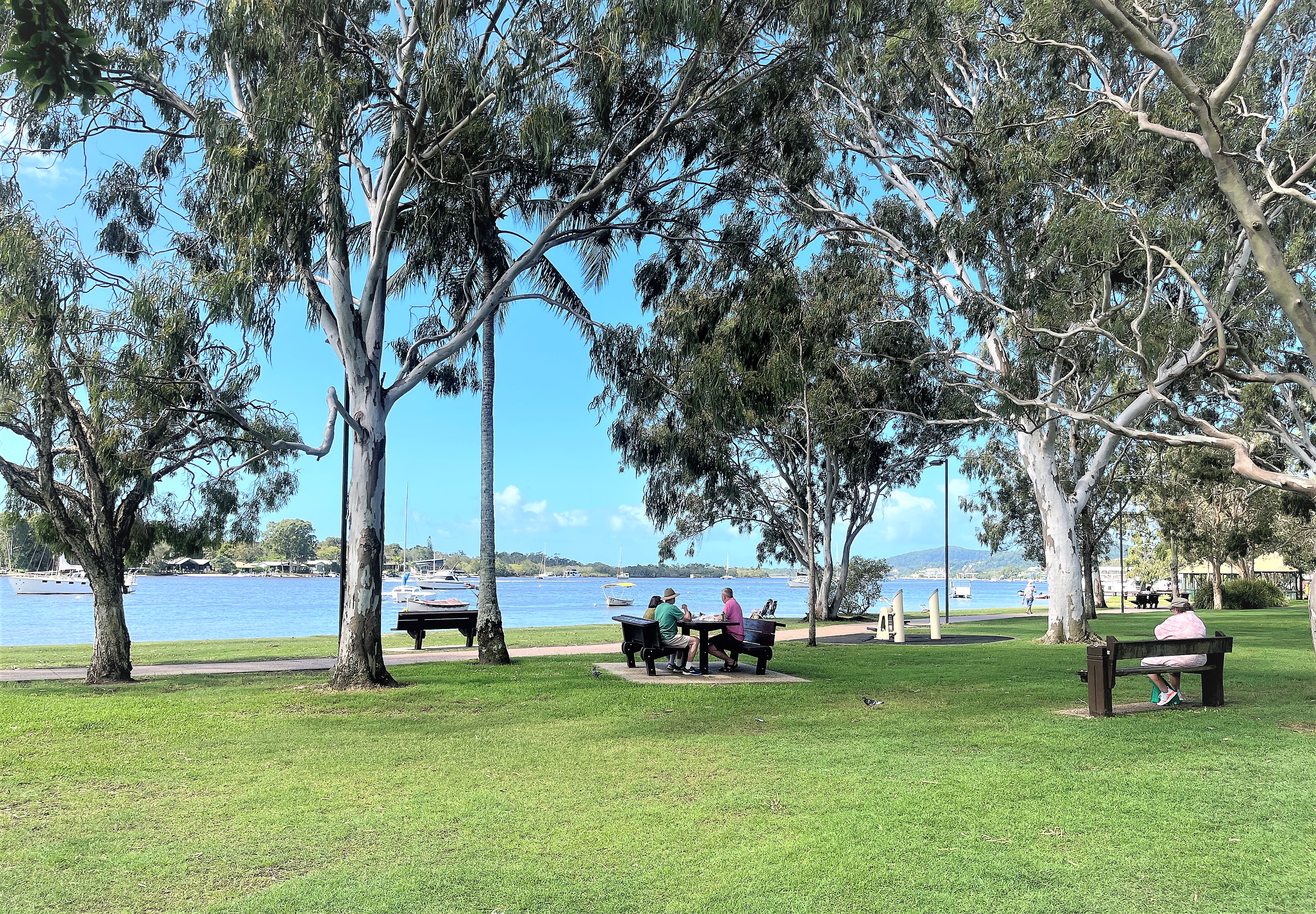
… and the lovely Noosa River & foreshore

But my favourite ‘thing’ is to walk around Hans’ village talking to residents. Almost all are retired, though some are professionals over 50 who still work. There are ex-pilots; trauma nurses; doctors; accountants; architects; engineers; software developers and electricians. Each has a story. Their lives, fulfilled or otherwise, contain important lessons we could all learn from. 

I ask myself if they could have been happier, wealthier or healthier than they are now. Could we use their experiences while we’re still young to plan how we’d like to live in our retirement? 

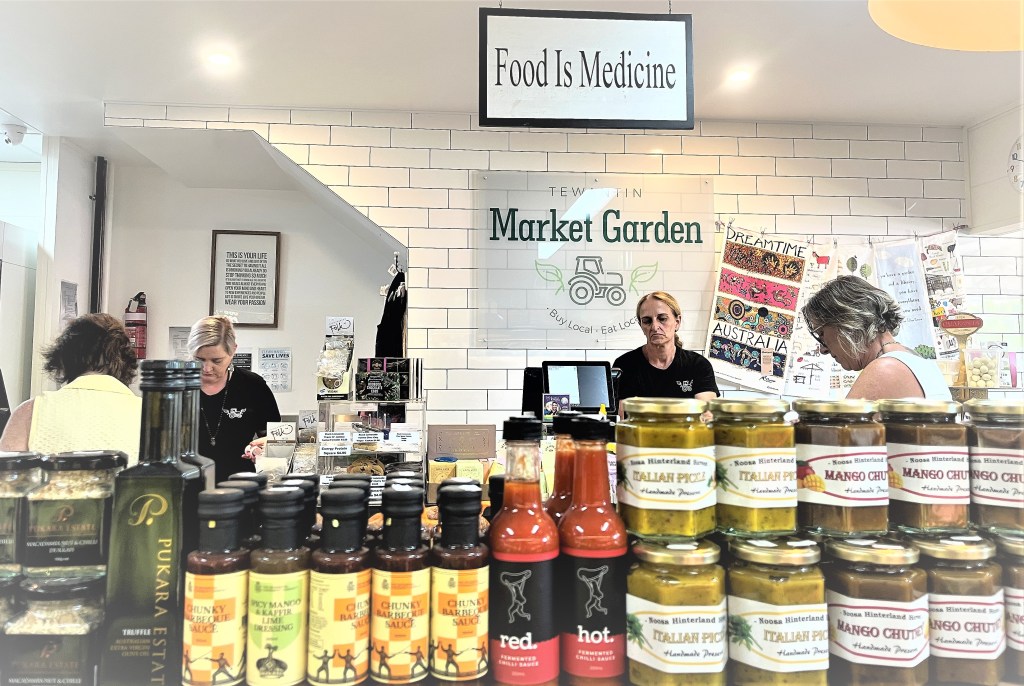
People in the village can access activities and outings almost every day of the week. The local bus drives them to a choice of shopping centres at least twice a week. The ‘Outlook’ retail centre is within walking distance – with a supermarket, medical centre, hairdresser, butcher, market garden, a delicious bakery brewing beautiful coffee, pies (try the beef and cracked pepper!), croissants, and my favourite: ‘banoffees’ (banana and caramel pies)! To those hosting Friday happy-hours in the village, there’s fish and chips and pizza for delivery and takeaway. Sounds like heaps of fun, doesn’t it?

But as in life, scales can tip the other way. There’s also the heartbreak of often living alone after a partner has passed away, and dealing with illness that may come with age (which really shouldn’t!). Sadly, death may come from chronic disease, depression, or simply ‘giving up’ because of loneliness and finding no-one to talk to or confide in.

Again, I see insidious bad diets taking over – now in the form of pre-cooked meals. It seems preparing raw salads and fresh food is “too much of a bother” when you’re older. It’s such a shame that the motivation just isn’t there. There’s no need to shop for food, spend time in the kitchen, or wash-up after – all you need is one cutlery set. Your time on a comfy armchair or at the computer is so much more appealing.

I saw heaps of these in Noosa and in the village. Remember what I said before about the benefits of WALKING?
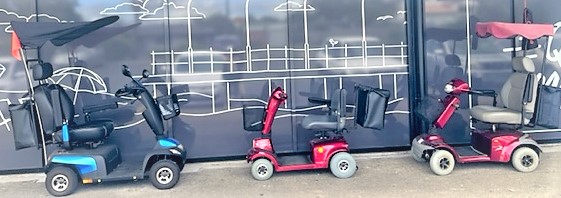
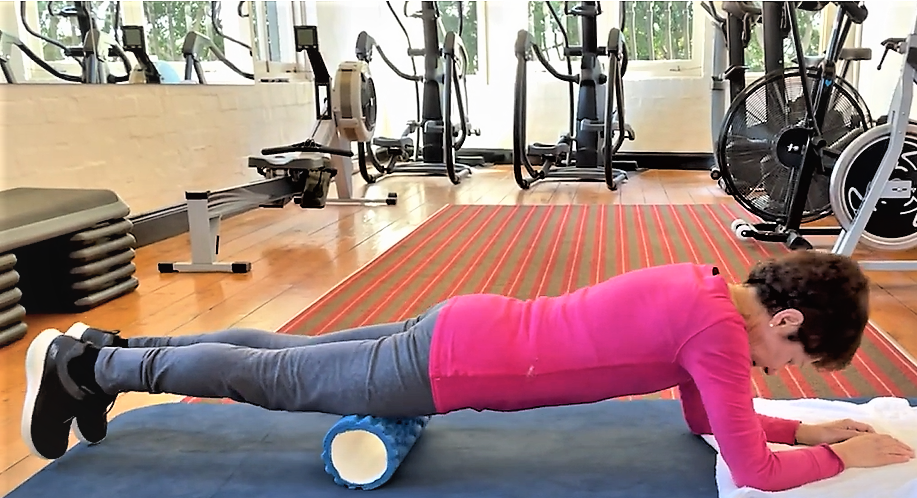
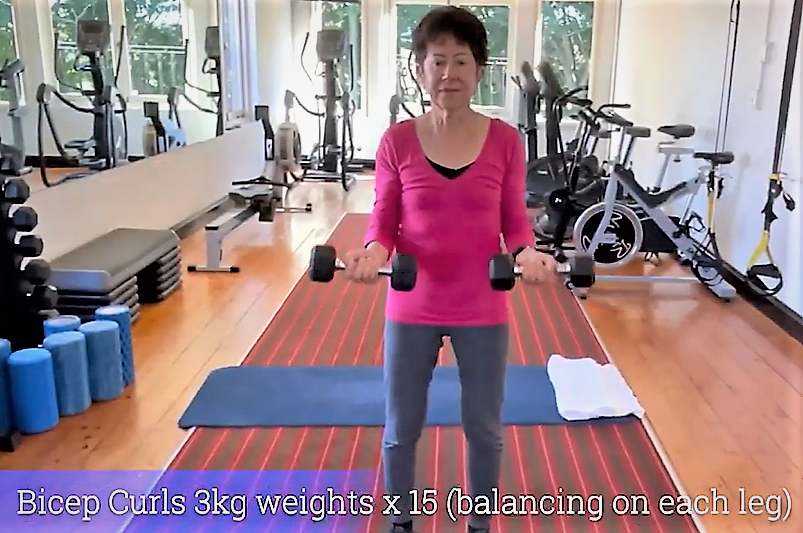
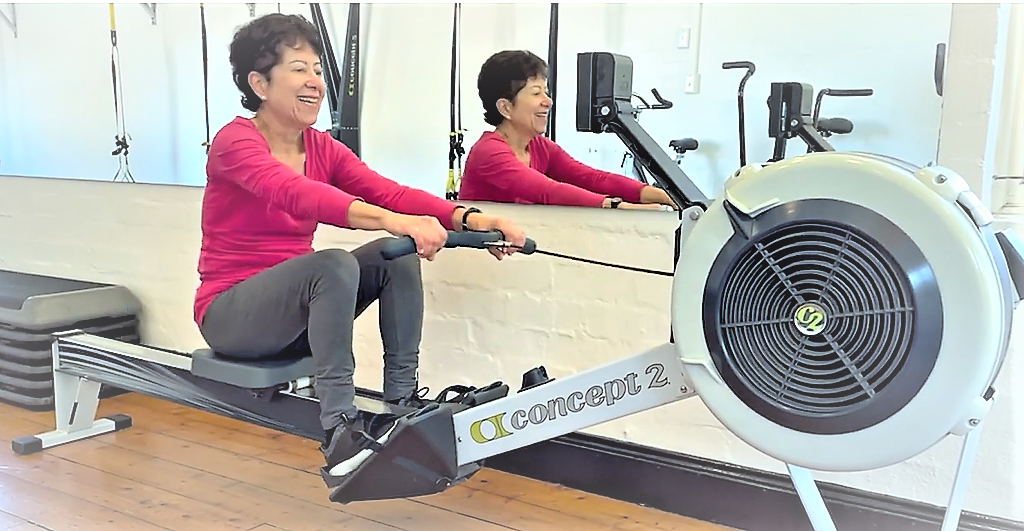
But you have a choice. I joined a gym at 68 – I’m now stronger, more stable and feel more alive than ever. So you too can get moving – NOW!! 
I also couldn’t also help but notice in cafés everywhere that each person had coffee with an oversized pastry/muffin/scone on their plate. I suggest sharing or keeping the other half for another day. I always have a sandwich bag handy for this. You’ll lose many kilos a year – and besides, the milk in your cappuccino will fill you up anyway! 

This is the era of fast food. From an early age, we buy into the “Why-cook-get-takeaway”? philosophy. This inevitably continues into retirement, and is a cause of declining health. 

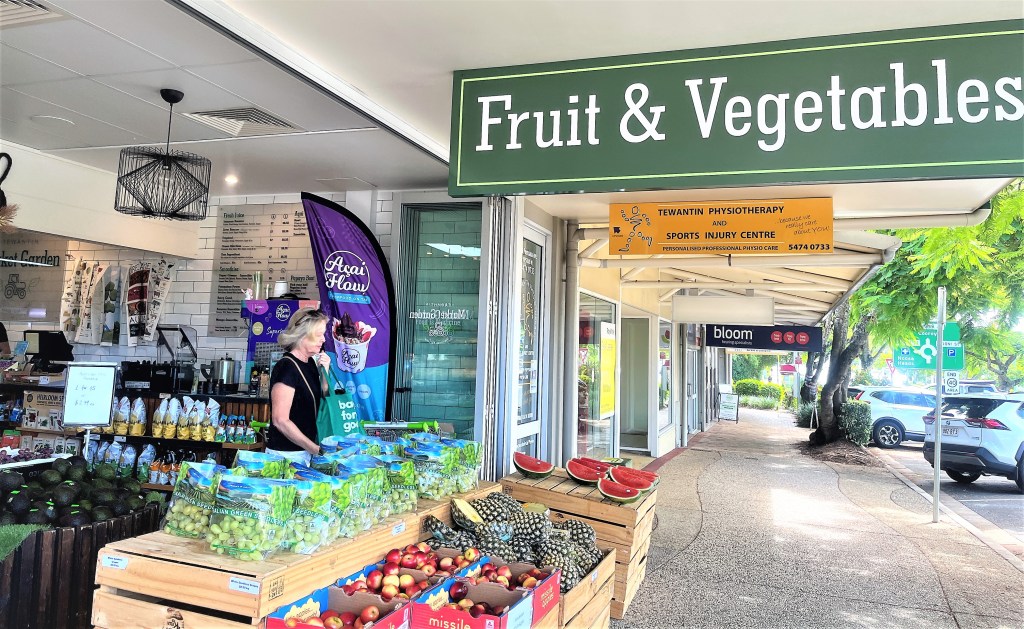
Of course, the first thing I did after I arrived was to stock up on fresh salad vegetables, lemons, grapefruit and my favourite red papaya – all from a marvellous local grocer. I stuck to my morning regime of having my grapefruit and papaya first thing in the morning, before my walk and before breakfast.  
The importance of this came home to me holidaying in New York a few years ago. I thought “It’ll only be for a few days, it’s not worth going into a serviced apartment … we’ll just eat out.”

Wrong. After only 2 days of bottled fruit juice, cereal for breakfast, bistro meals and snacking between hop-in-hop-out coach tours, I was tired and irritable. Drinking more tea and coffee didn’t help one bit. I made a firm resolution after that: when I travel I must stay where there’s a kitchen and a supermarket or grocery store nearby.  

I now cook without extra salt, sugar or flavour enhancers, and enjoy every morsel. I drink coffee and tea when I feel like it and not because I need energy. 

Eating out? Here’s some good advice:

  1. Have a raw salad.
  2. Size of meals vary, so ask before you order. If it’s large, share it or take away half. 
  3. Don’t have gravy or thickened sauces with your dish.  
  4. Drink only water – or dilute a lemon-lime and bitters (yes, you may get laughed at!).
  5. Skip dessert. If it’s simply irresistible, pack it up and have a portion at least 2 hours later. 

This may be boring to many, and you might think I’m strange (not seasoned Pearlers, I hope). Isn’t life uncertain? We could all do the right things and still die prematurely! I agree – but I’m prepared to make this prediction regardless:

Medical research will continue to provide evidence of how the colon controls your physical and mental health and will protect you from chronic diseases. The 1001 diets we hear about in a nutshell? Have food that’s fresh, raw, rich with enzymes and fibre.

Timing them correctly is my secret to a Good Life!


Workplace Relations #5

Efrem’s comments in Workplace Relations #4 summed up the “chill” of modern human relations beautifully – and deserved a special response. But they also made me think … what really happened in the 90s “that made people lose their feeling for their fellows”?

Strangely enough, I believe one answer could be the introduction of … Microsoft Windows. At the hospital where I worked, typewriters and ‘dummy terminals’ were removed and replaced with bulky monitors and keyboards, with an instruction book and perhaps 3 hours of ‘personal’ instruction with trainers who were best left to their own devices (very few had teaching skills).

Months before this changeover, I enrolled in a MS Word evening course. I didn’t have the slightest idea of what it was about but I knew that it was important. I told my friends and colleagues to do the same but they were insistent “They will train us at work”. 

Well, “they” didn’t. The result was frustration, stress and longer work days. One night a week at a TAFE college for 3 months wasn’t really enough, but at least the icons on my monitor became friendlier and more familiar. It took weeks before anyone was comfortable with “cutting and pasting”, changing fonts, creating tables … and months before Excel no longer terrified us.

But in the meantime, I noticed we weren’t talking to each other, or asking “how are you” as often, or meeting up with friends for lunch. There was only: “How am I supposed to get this done before 4?” … “I feel like throwing this out the window”, or “Please show me how to create a header and footer!” The only thing that mattered then was to master this “monster”. Staring at the screen for hours, we were totally spent by the time we got home. 

Now this is true: We couldn’t stop laughing when a colleague pressed the ‘Help’ key and wondered why the IT person didn’t show up!!

As years passed, our confidence and proficiency grew. Computers and printers were upgraded every few years; they became faster and had more applications. And emails took the place of talking. New expressions began to replace simple words. I hated one in particular: “Please cascade this report to your team” (i.e. “please forward”). 

I was so fortunate to have “teened”  in the 60s – where we helped each other with our homework, shared our lunches and played hopscotch. In 1969, as a cadet journalist at the Sydney Morning Herald, our editor would yell: “Don’t give me a story without who, what, when and why!” Our chief-of-staff would pass by my desk with a reassuring hand on my shoulder. We’d laugh with senior reporters at our typos, and there was always someone who offered to walk me to Sydney’s Central Station when my shift finished at 11pm. 

By stealth, technology stole our sense of humour, our chats over backyard fences and our time. Now, it’s all about ‘AI’. Our future, our very existence, depends on artificial intelligence totally and completely. 

News travels in seconds. Journalism has become sensationalist and partisan, with important facts left out. Politicians have make-overs, voice coaches and speech-spin doctors. Anything that helps to win an election. What happened to good old “Tell it like it is!”, and hands-on troubleshooting? Advertising is in your ear every second, and is everywhere … “Buy this NOW!” … “Click here to lose weight” … “Remember to gamble responsibly” … 

Of course I do love my laptop and iPhone – where I watch, listen, learn, write and communicate anytime, anywhere. But my hands aren’t only used to clutch my phone and to text: they’re also used to console and reassure. I haven’t stopped smiling. Whatever we’re doing, thinking or worrying about, we can always smile. Try it. Frowning just strips your energy. I look at people and listen when they talk. 

I sing all the time; it relaxes me. I’d use music even at work. Our favourite song was ‘Manic Monday’ … 2 minutes before we took our phones off voicemail (guess when!). We sang ‘We Gotta Get Out of this Place’ after a bad day, and left work laughing. When my PC started to play up, I’d sing and groove to Stevie Wonder’s ‘Yesterme, Yesteryou, Yesterday’. Music has such amazing power – use it.

So let’s get over all this “selfism”. And THANK YOU, Efrem. The world we knew has changed, but we can make it better! 

Now if only ‘Apple’ meant that lovely, crunchy fruit that keeps doctors away …


The obesity epidemic

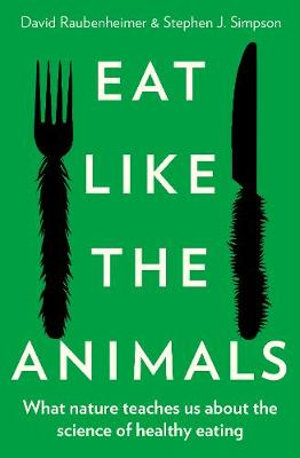
The authors of Eat Like the Animals, David Raubenheimer and Stephen Simpson, wanted to test their theory that our protein appetite has driven us to consume excess calories in a world where the food supply is dominated by fats and carbs. David and Stephen recruited a nutrition scientist, Alison Gosby, to design special menus to test their theory. She found that those on the lowest protein diets consumed 12% more calories:

[Extra calories] … come “not from people consuming bigger meals but instead through snacking … you might expect that sweets was to blame, but the increase came almost exclusively from the savoury-flavoured snacks that tasted of umami … on the high-carb/fat and low-protein diet, subjects were fooled into eating things that only tasted like protein but in fact were highly-processed carbs. … That 12% total calorie increase is more than enough to explain the entire global epidemic.”

(Raubenheimer, D. & Simpson, S. (2020). Eat like the Animals, pp.54–55. HarperCollins Publishers: Sydney.)

I see all this when I’m out shopping. The “coffee and a pastry” combo is now a fave option at cafés as being value for money. You’ll see at least one muffin, cake or croissant on every table. Shopping at the supermarket? Let’s grab a pack or two of chips while we’re at it (“love that new seasoning!”).

Fancy a browse through supermarket shelves? 

  • Biscuits: Laden with sugar, fats and ‘artificial flavours’ … but now with ‘Murray River Pink Salt’ (or ‘Himalayan salt’). Salt is salt, folks. And if you read the labels, they’re adding much more of it.
  • Rice crackers and rice puffs: ‘Sweet and Salty’ inside separately portioned ‘snacks’. Wow, what a perfect combination – you’re hungry, a portion wouldn’t hurt. 
  • Marinated meats: You’ll find them in chicken, meat and fish said to make for ‘easy cooking’. But please read the label. ‘Sodium’ is there, more than necessary. 
  • Ready-to-eat frozen and canned foods: You’ll need a full minute to read the ingredients. Among them will be modified starches, reconstituted fruit juices, soy and vegetable protein extracts, vegetable oil, food acids and of course ‘flavour enhancers’ (aka salt).
  • Chips, chips, chips: “ … artificial flavourants to make cheap, starchy and fatty foods such as potato chips taste savoury like protein.” (Raubenheimer & Simpson, p.153)
  • Fizzy drinks: Just have a look at the sugar content in plain old soda. 
  • Plant-based packaged foods: Now on dedicated shelves (I checked them out). I heard one Mum ask her 2 children (aged about 10–12), “Which one would you like for dinner?” I was so tempted to take one of those off the shelf and read the poisonous list of ingredients aloud

“ … increasing market share – sometimes known in food industry circles as stomach share – is a powerful force that shapes our food environment … Cocktails of chemicals are added to improve the color, texture, flavour, odour, shelf life … and the mixtures are packed with cheap fats, carbs and salt.”

(Raubenheimer & Simpson, pp.152–3)

Everything in the list above, if eaten regularly, will slowly destroy your colon’s ability to protect you from viruses and chronic disease. Your metabolism will slow, your moods will fluctuate, and weight gain is inevitable. And here we are, in this technology-charged age of abundance, consuming trolleyfuls of cheaply-produced foods to satisfy our protein appetite. 

To me, the key point here is BALANCE. According to Raubenheimer and Simpson, we have 5 appetites

  1. Protein 
  2. Carbs 
  3. Fats 
  4. Sodium
  5. Calcium.

“These nutrients have been singled out by our evolution for special reasons. One is that they are needed in our diet at very specific levels – neither too much or too little.” (p.25)

But what about the other essential nutrients? The entire range of vitamin groups plus minerals like potassium, iron, zinc, magnesium? Our natural diets are rich in these. By eating the right amounts of the ‘Big 5’ – especially with raw fruit and vegetables – you automatically get enough. Be mindful that supplements don’t work as well, if at all, if you keep eating rubbish

Here’s how you can properly balance your diet, keep your colon happy and your weight down. I’ll use breakfast as an example of foods with each of the Big 5: 

  1. Lots of water, citrus or any preferred fruit. Wait 25 minutes. 
  2. Then have either rolled oats, kefir yoghurt, honey, sultanas, almonds, walnuts or sunflower seeds (nuts can be ground together). Take this to work if you need to rush out. 
  3. Or have toasted Turkish or sourdough bread with a good slice of cheese or an egg. 

You’ve made your Big 5. For more meal suggestions, read ‘Your natural detox’ in Diet & Your Colon menu. This is critical to your well-being, so be prepared. When you’re out, take an insulated bag with you filled with at least one of these items: 

  1. A cheese sandwich
  2. Scrubbed apple (if pre-cut, squeeze lemon juice to prevent oxidation) 
  3. A peeled carrot ready to chew 
  4. A container of almonds, walnuts or sunflower seeds with a fig, date or dried pear. 

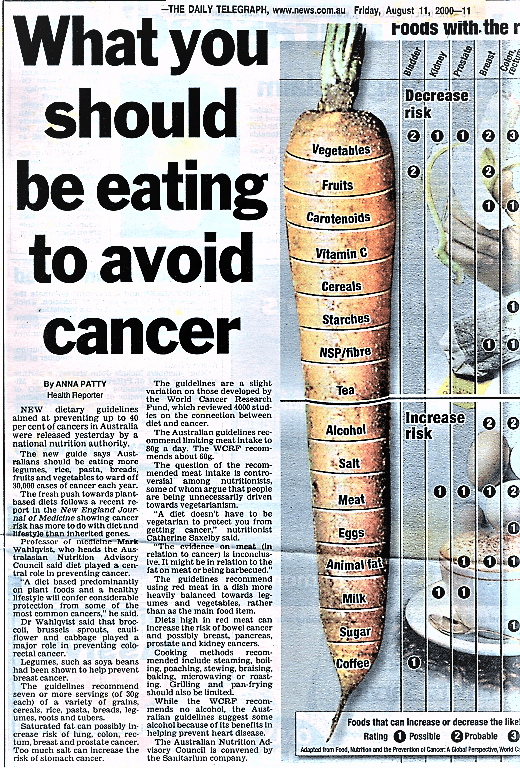
In fact, the carrot is my favourite vegetable. It’s nature’s all-in-one’ most valuable and complete food. Click here for my short video on it. 

If you see me at the supermarket before dinner time, I’ll be munching and crunching. Hope you will be too – but if your feet still take you to biscuits and chips, read the labels

Satisfy what your body needs and your cravings for these awful foods will slowly disappear. Have your muffin and cake if you feel like it, but share half with a friend or wrap it up for another day. 

GET SMART, PEOPLE!!


Workplace Relations #4

A big THANK YOU for your lovely comments on Workplace Relations #3 – they so encouraged me! But I did leave out one important issue in that post.

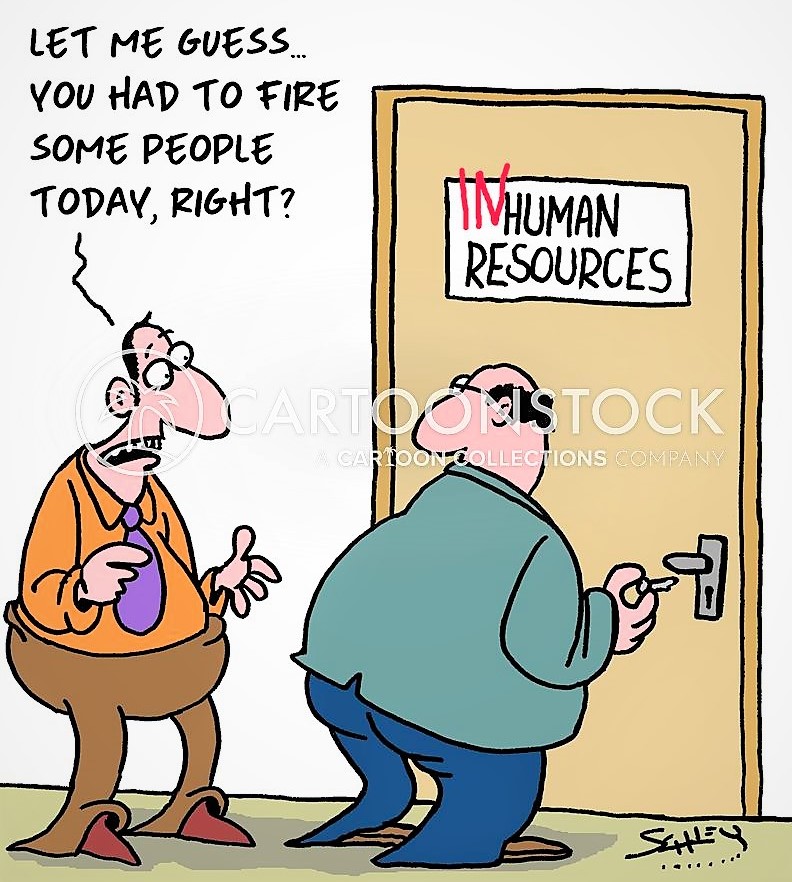
Have you noticed how inhuman HR and the recruitment process have become?

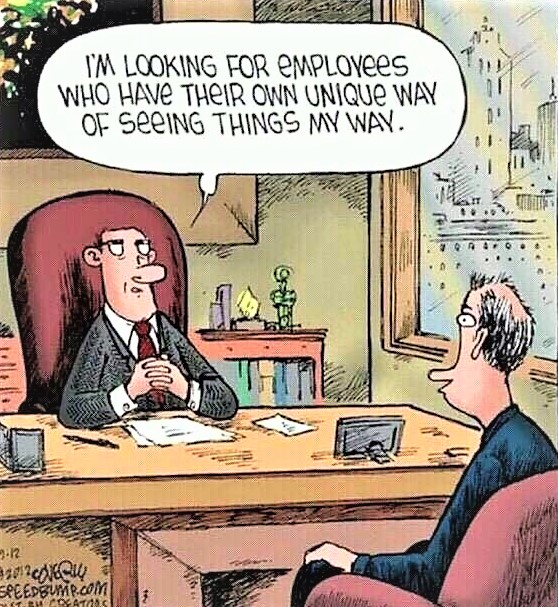
Or the manner in which our dear managers and team leaders conduct themselves? Delusions of grandeur strip them of all kindness; they look away at any sign of conflict in their team, avoiding problems “too hard” to handle. 

Observe their body language: those side glances and facial expressions when they think no-one’s looking tell all. Maybe it’s your age, clothes, how you speak, your personality (if this clashes with the manager, you haven’t a hope), or even your postcode.

There’s also the “fear of being outclassed”. Notice how promotions go to those who don’t threaten managers’ egos? It’s so sad to witness. Shouldn’t we all feel comfortable and secure at work? 

Ironically, organisations preaching “collaboration, openness, respect and empowerment” with other core values of integrity, trust and accountability are often the ones that fall short when it comes to choosing the right leaders to set those examples.

The first introduction to a company begins with the dreaded interview. Your emailed CV may not always be acknowledged. If you’re lucky, you’ll receive a call or text message with an interview time; no response after the closing date means you didn’t get to first base. 

After I began at Sydney’s Prince of Wales Hospital in 1981 to the time I retired in 2016, I didn’t attend further interviews for any new positions. When I started, a friendly manager hired me for a temporary stint, which became permanent. It was the 80s – when positions were advertised in newspapers. People would walk in, fill out applications and wait for the response. If it was positive and applicants were interested, interviews were organised. If not, their forms were kept until other roles came up. Interviews were always with personnel and department managers. It was over a cuppa, there would often be some laughter, and the interview would end 10 to 15 minutes later. We’d call them back, and I loved hearing their voices lift when we said they made it. But we also called back the ones who didn’t, and encouraged them to apply again

When I later moved to payroll, I noticed that from the mid-90s human contact in HR slowly dwindled. Then from about 2012, time and cost-saving technology further changed how applicants were treated. It became arduous, frustrating and demoralising for them. Good luck trying to talk to someone today – anyone – to help you navigate several pages of questionnaires, devised to justify jobs of bureaucrats. And if you’re granted an interview, REJOICE! 

Now, personal contact is almost nil, and the entire recruitment process is done online with more forms laden with jargon. A multi-paged ‘Code Of Conduct’ is usually given to employees to sign if they got the job; disclaimers have become paramount to free employers from any legal liability. 

In payroll, I was twice asked to sit on an interview panel. We were given sheets of paper with specific questions – so many were irrelevant and had little to do with actually getting to know the person. People became more nervous and fumbled their answers; I recall them waiting in another room before interviews. I’d go up to them with a smile, make tea and tell them to take slow deep breaths. It was amazing to see how those few words gave them so much comfort! Human resources.

It’s now a cold, unwelcoming atmosphere – that may only warm up when a younger, smooth-talking applicant comes in. The panel nods in agreement: yes, that’s the “better” candidate, and makes its decision. 

As with virtual interviews, negative or positive assessments are already made in the first minute. Daniel Goleman sums this up nicely: 

“ … once a negative bias begins, our lenses become clouded. We tend to seize on whatever seems to confirm the bias and ignore what does not. Prejudice in this sense is a hypothesis desperately trying to prove itself to us.” 

(Goleman, D. (2006). Social Intelligence, p.300. Random House Australia (Pty) Limited: Sydney, NSW.)

Does your actual ability or aptitude actually matter after that? 

A year after I retired at age 68, I decided to apply for a part-time position in NSW’s local health network. On the panel were people I knew well during my time in payroll. I greeted them with “Good morning, so nice to see you all again”, but not one smiled back. They muttered, stared at their sheets and were in disbelief as to why I’d apply for a job at my age. I knew I was wasting my time. Calmly I got up and said, “Sorry guys, I changed my mind. Please call in your next applicant”. 

In-person interviews

  • Arrive at least 20 minutes before. Take slow, deep belly-breaths for 10 minutes. You’ll feel a lot calmer.
  • When you’re called in, shake hands firmly and make direct eye contact with the interviewer/s. Now look around you. Is there something in the room that you can positively comment on? A picture, the view from the window? Flowers on the table? An honest compliment always helps, and breaks the ice.
  • If you’re asked a question you’re not prepared for, say something like: “I don’t know the answer to that question, but I’m sure it’s something I could easily tackle once I’m in the job”.
  • How would you react to certain situations? (a psychological test no doubt!) Answer honestly, and don’t feel the need to fudge anything to impress the panel. If you need a little time to think of a particular situation, say so.
  • Be comfortable and at ease in the room, keep direct eye contact and never shift your gaze. Make your answers short and to the point – and only offer your opinion if you’re asked for it. 
  • Before leaving, shake hands with the panellists and thank them for their time. 

Zoom interviews

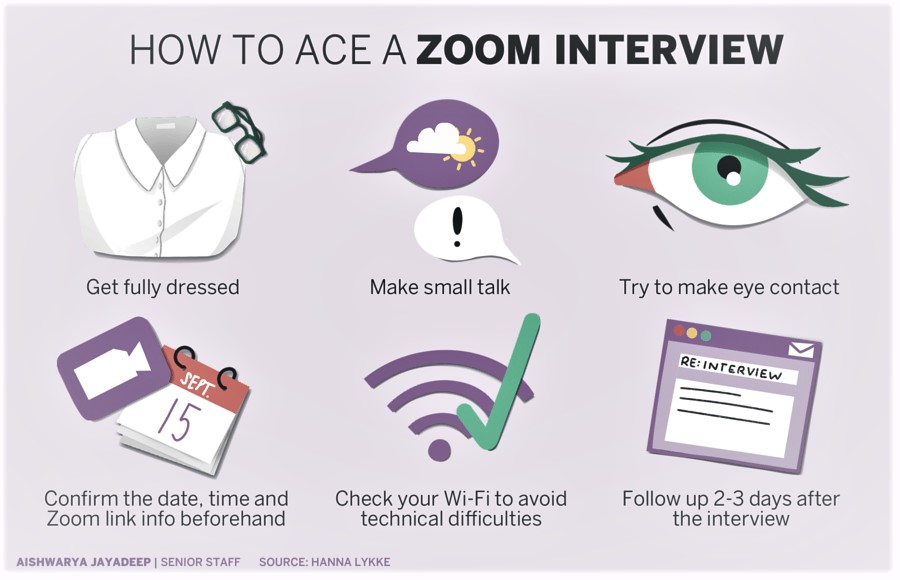
  • Decide in advance where you’ll be ‘Zooming’ from: choose a room that’s well-lit and free of distractions (including background noises which could disturb you or the interviewers).
  • Keep your virtual background simple: busy backgrounds are distracting. A clean and tidy space may not need a background at all (which may be a positive to show some of your personality to potential employers!).
  • Consider using an unobtrusive headset: it can help you hear the interviewer more clearly. Use common sense – AirPods are good, gaming headsets aren’t. A quiet space without ambient noise is even better.
  • Invest in a good USB mic.
  • Check your internet connection and ensure your camera and mic are on.
  • Double-check the interview time: especially if there’s a time difference. It’s wise to click on the Zoom link 5 minutes before.
  • Men and women: dress smartly and be well-groomed (hair, fingernails, teeth, etc.). 
  • Keep your arms on your desk: hand movements on video will be exaggerated and can be annoying. 
  • Limit your facial expressions: they can also be distracting on screen.
  • Speak clearly, not loudly: sound through the mic can be distorted; it’s fine to ask if your voice sounds OK.

Facing HR

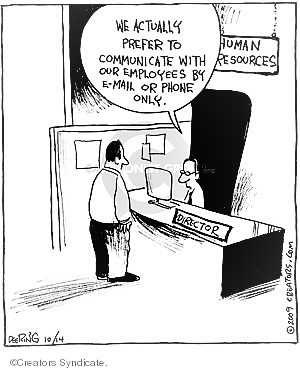
  • No surprises: they prefer emails to personal contact and always take the side of department managers!
  • You might have no option but to directly meet with them for a difficult work issue (especially if it’s with your team leader/manager). Bring along a union rep and/or 1–2 colleagues (they might change their mind if you ask for their support!).
  • If you’re meeting HR alone:
    – write down what you want to say beforehand
    – give at least 1 example of an incident or behaviour you felt was unacceptable
    – if your team leader is #3 on the power grid, get the names of #1 and #2
  • Speak calmly: never raise your voice or show any hint of emotion. Smile. It helps to do 10 minutes of slow, deep breathing before you get there.
  • Make your intentions clear: e.g. you’d like HR to arrange a meeting with your manager and #2. Tell them to expect an email from you; send a copy to your managers, adding details of your talk with HR.