Plant-based foods: Research, please!

There seems to be a craze for plant-based foods, with manufacturers and restaurants serving vegan products tasting like meat having a wonderful time promoting them!

Alex Ruani, researcher in Nutrition Science Education, University College London and Chief Science Educator at UK’s Health Sciences Academy says: 

“Protein is known to be the most satiating of all macronutrients and helps to assuage hunger pangs and cravings. But it is easy to become fixated with the latest trendy protein sources, restricting your intake to the detriment of your health.”

(Bee, P. (2022, March 31). More Protein? How to Eat for Heart Health. The Australian.)

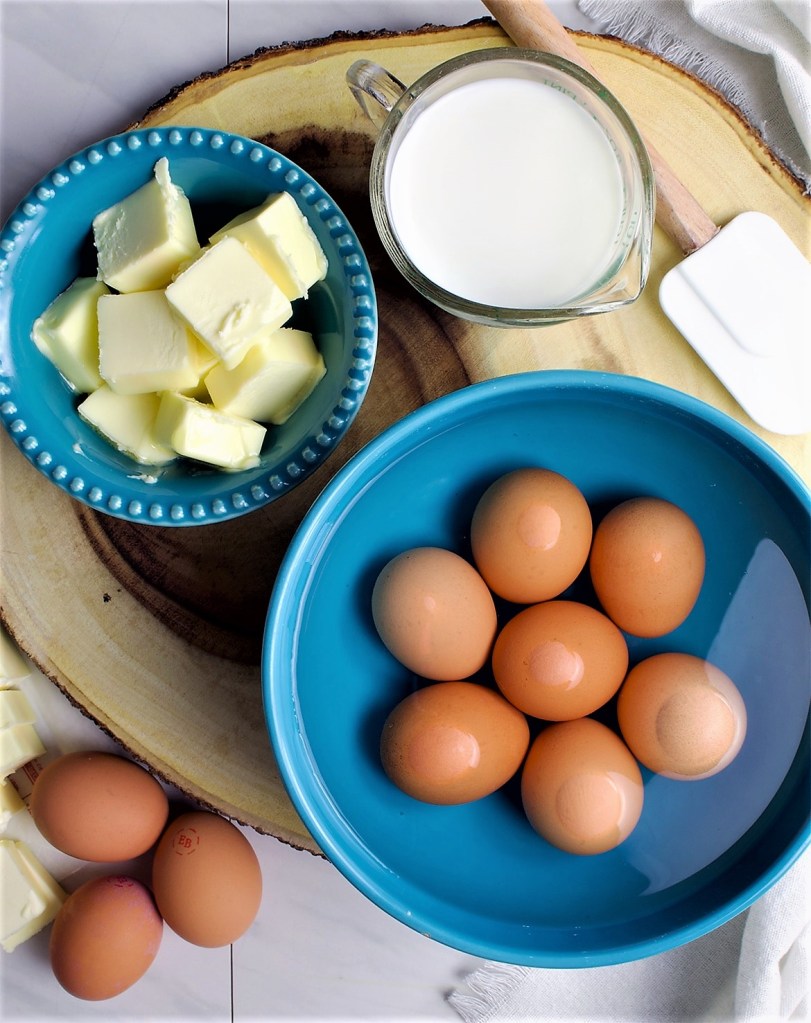
Whatever your reasons for not eating ‘animal food’ including dairy, eggs and fish, I hope you’ve done your research to make sure you’re getting enough protein. Protein is VITAL to the health of our cells, tissues, muscles, bones and skin – it even regulates our moods! 

Children especially need protein; it’s essential for their growth. And from the age of 60, we too need more because our bodies become less efficient at using it and muscle mass starts to decline. 

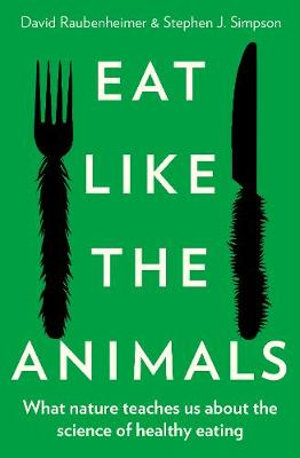
The authors of Eat Like the Animals in years of research found that compensating our natural protein appetite with calorie-rich, inexpensive fats and carbs where fibre has been removed, results in obesity: 

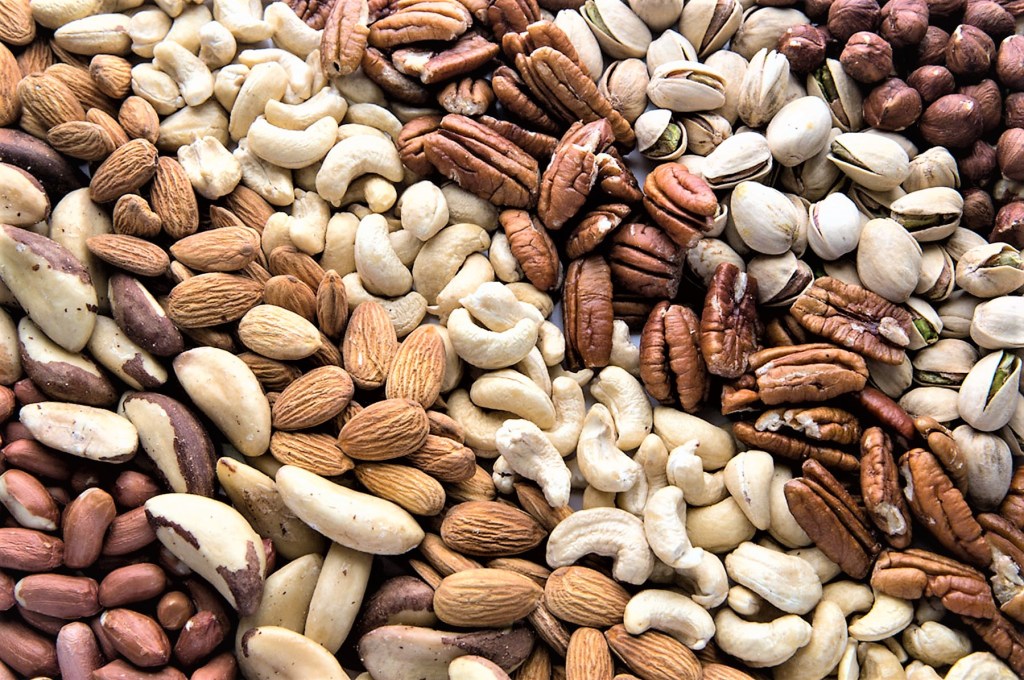
“High protein foods from a variety of animal (poultry, meat, fish, eggs and dairy) and/or plant (seeds, nuts, legumes) sources to both reach your intake target and ensure a balanced ratio of amino acids, will satisfy the protein appetite most effectively. 

“If you are vegetarian, which is no bad thing, you will need to make greater efforts to eat a variety of foods, given that single plant proteins tend to be less well-balanced in their amino acid content than many animal-derived protein.”  

(Raubenheimer, D. & Simpson, S. (2020). Eat like the Animals, pp.194–5. HarperCollins Publishers: Sydney.) 

Legumes, beans, nuts, seeds and grains, rolled oats and leafy green vegetables (better raw) must make up for the higher ratio of protein that’s found in dairy products, eggs, red meat, chicken and fish. 

It certainly is a challenge. But I fear that the hype – this ‘fad’ – is clouding our logic. 

Beware! Labs are producing plant-based foods (PBFs) at a rapid pace, claiming they are “natural” and “preservative free”. When you’re tired and hungry, and haven’t stocked up your fridge or pantry, you will certainly be tempted. Grab a frozen plant-based pizza? Why not? 

Protein bars and shakes are options only if you’re an active sportsperson. But check the labels: excessive sugar, sodium, additives, trans fats have a negative impact on the health of your colon

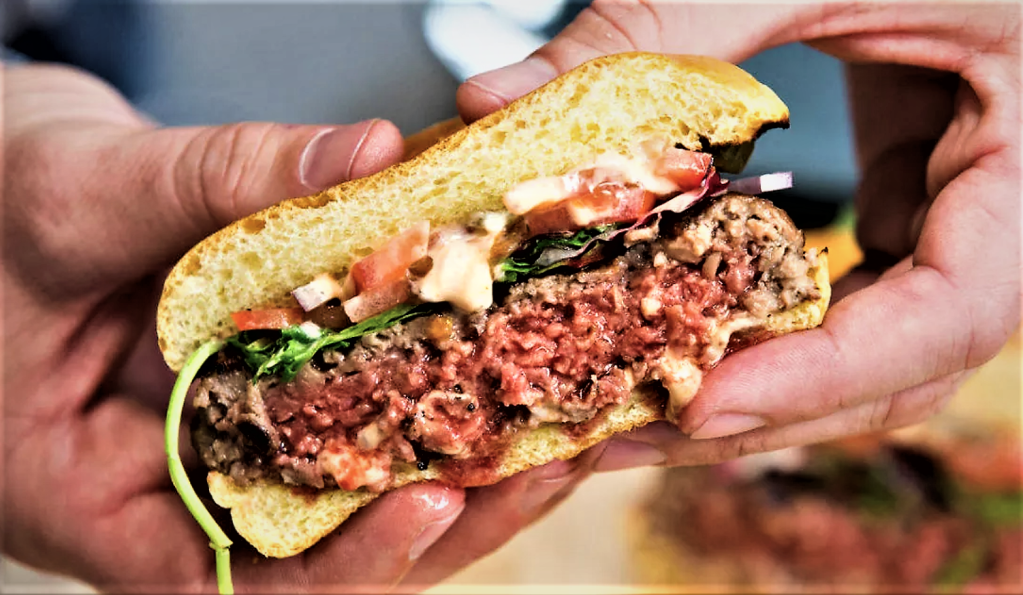
Heard about those restaurants serving PBFs with rave reviews? I tried an animal-free burger claimed to taste like meat on a doughy bun. It was much too salty and left me feeling uncomfortable. More nutritious and tastier is a cheese toastie on sourdough, tomatoes and lettuce! 

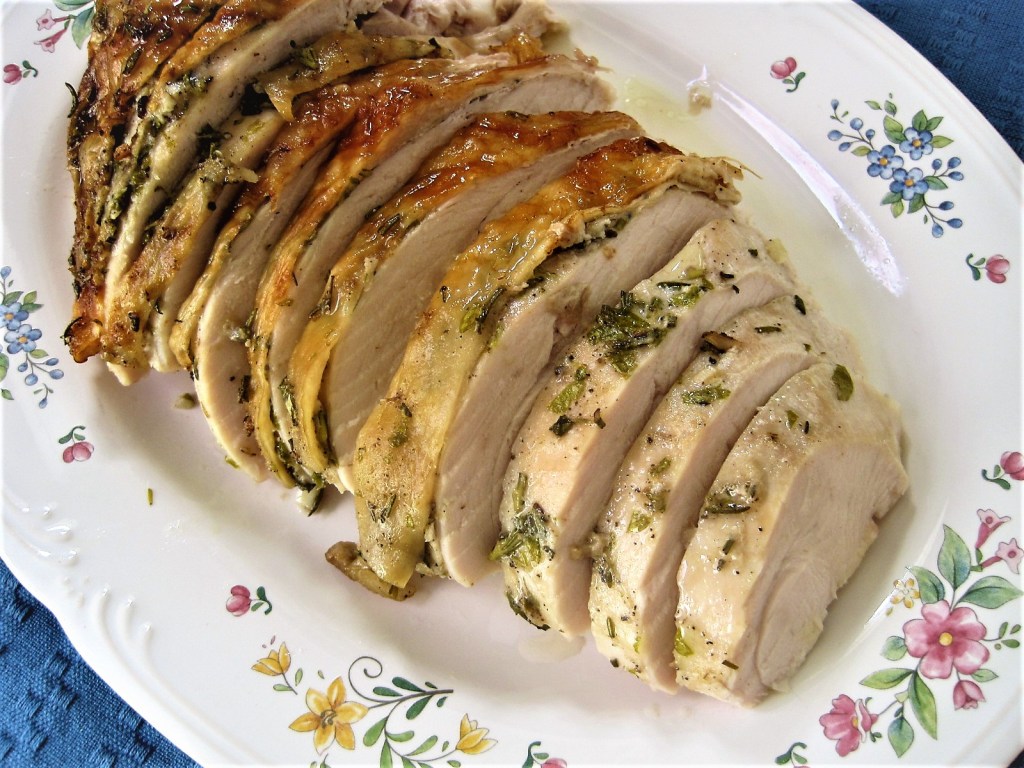
Personally, I believe an ideal diet should include raw fruits and vegetables, beans, nuts and grains with a variety of protein rich foods sourced from eggs and dairy foods, meat, chicken and eggs. If you want a healthier alternative to red meat, turkey or chicken breast will give you high-quality protein, as well as many B vitamins and several minerals.

Any processed and preserved meat (or cold cuts) is not meat itself, and what you should totally avoid. It’s extremely high in sodium, with evidence it may be linked to colon cancer. If you want a thorough and easy-to-read guide with nutrient composition, i.e. the actual proportion of protein, fat, carbs, calories, saturated fat and sodium in foods we’re eating, read Chapter 14, ‘Putting Lessons into Practice’, in Eat Like the Animals cited earlier.  

However, a plant-based diet has its merits. It makes it easier to maintain a healthy weight, lowers cholesterol and the risk of heart disease. It also limits our easy, off-the-counter grabs of ‘animal based’ and most fast foods. And herein lies the answer:  When you remove the bad stuff your health improves!

In her book Food as Medicine: Cooking for Your Best Health, dietician Dr Sue Radd reflects on what she observes in her Sydney practice: 

“I see a big difference in their wellbeing once women start eating more vegetables, nuts, seeds, legumes and wholegrains – and that doesn’t necessarily mean becoming a vegan or vegetarian.”

(Goodyer, P. (2022, April 17). Prepping for Menopause – the Power of Plant Food. The Sydney Morning Herald.)

With better diets, some women report their hot flushes are better too. 

So let’s get back to the basics:

  • Rolled oats, yoghurt and ground nuts for breakfast instead of cereal
  • Egg or baked beans on toast instead of a muffin or crumpet
  • Avocado and lettuce on sourdough/turkish bread for lunch instead of a burger or overloaded sandwich
  • Dried figs with walnuts – or fruit or yoghurt as a snack
  • A large salad with greens before dinner
  • Less meat and starches, and more vegetables for dinner.

Maybe my video on plant-based foods will convince you? And I give you a healthy, daily food regime in my earlier post ‘Your natural detox’. 

Sound simple enough??


April 2022

While a country was being invaded, the stockmarket actually went up!

With buildings pummelled, lives destroyed, and women and children fleeing to safety in the freezing cold – how did we watch all this horror and still say, “It’s a good time to buy gold” … or “oil” … or “lithium”??

We also had floods twice in the same month impacting parts of NSW and Queensland – leaving families homeless and businesses in crisis. But shares in dumpsters, fertilisers, Coles and Woolworths rose with the waters. 

TIP: The market is heartless. It senses opportunities from calamities and rewards those who sniff them out! 

I kept to my routine of researching, making notes and reading through investor updates – but the images of the suffering and devastation in Ukraine kept flashing through my mind. But for the first time in years, I lacked my usual enthusiasm. 

In spite of 2 World Wars, civil wars, terrorist attacks and natural disasters, the sharemarket survived. At the end of each disaster, it climbed higher. Will Ukraine survive as well? 

In times like these, my granny Azizah would encourage us to pray. Her faith was unyielding and unshakeable. She was our shining light of hope and we turned to her for reassurance. Dad’s approach was different. “Don’t waste time on what you can’t control – work on things you can and be there for the people who need you!”, he’d say. (I took in a bit of Gran and a bit of Dad.) 

So let’s look at what’s happened since our February 2022 investment update. 

I believe that agriculture stocks – the term is now ‘agribusiness’ – will grow and do well, with technology (e.g. sensors for efficient water use and to detect weather patterns) to boost production and minimise risk in the event of crop failures and natural disasters. Demand has never been greater for Australian cattle, milk, cotton and wool, water, cereals, vegetables and fruit.

If this interests you, I suggest you look at the top 50 Agribusiness list in the AgJournal (their magazine was included with The Australian on March 26th). Companies from 1 to 50 were listed with their ASX codes, with financials for the 2020 and 2021 financial years. Commodities included eggs, potash, goat milk, ginger and macadamias, olives, hemp, and rice. Companies included: 

  • A2 Milk (#3)
  • Bega Cheese (#7)
  • Bubs (#18)
  • Maggie Beer Holdings (#20).

I closed my eyes and pictured hectares upon hectares of land … lush with green, golden wheat, grazing cows and sheep and beautiful fruit trees. We have so much to offer!

AgJournal also mentioned fertilisers. There’s a world shortage: demand is high and prices are soaring. Recent floods have all but swept away nutrients in the topsoil which must be replenished. Here’s an excerpt: 

“Deep in the remote mining areas of Australia, a quiet revolution in precious minerals is evolving. It’s not the gold that has captured fossickers’ imaginations going back 170 years or the modern day hot property of lithium or rare earths … it’s the farmer’s version of gold: Fertiliser. … 

“A number of Australian mining companies are working towards developing local sources of potash, urea and rock phosphate fertilisers – products which Australia largely had to import … ”

(Agjournal, p.12, March 2021)

Something else I read that was interesting: a serious supply shortage for an additive called ‘Adblue’ – “A diesel exhaust fluid used in vehicles with Selective Catalytic Reduction (SCR) technology to reduce harmful gases being released into the atmosphere … ” 

Incitec Pivot (ASX: IPL) makes AdBlue in Australia. We learn from the web page that with federal government support, it’s … committed to mobilise its expertise and assess the expansion of AdBlue production at its Gibson Island plant in Brisbane to meet Australia’s needs, following limited supply from overseas markets”. Established in 1919 and Australia’s largest supplier of fertilisers, it’s #2 on Agjournal’s top 50, and is now up on our watchlist! 

Lithium, copper, nickel, gold and uranium stocks are still making headlines, but please be wary of those still in the exploration and development stages

SAM’S COMMENT: While higher commodity prices will certainly make some mineral deposits more attractive, which will lead to higher share prices, beware of what mining analyst Mickey Fulp refers to as ‘frogs masquerading as princes’ in this space, as these stocks are still quite high risk!

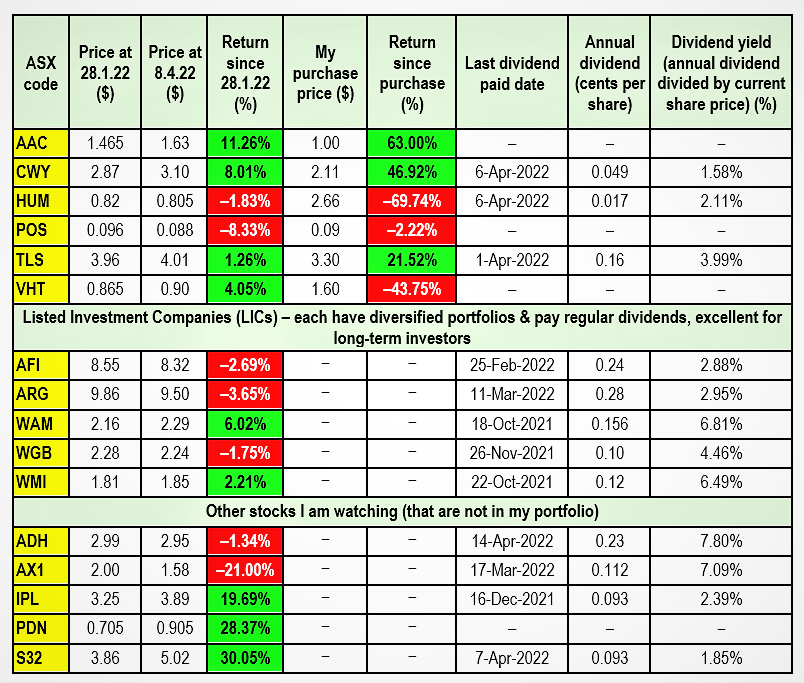
April share updates

(Thank-you to Sam who helped compile the Table)

My comments

  • AAC: One of my favourite agribusiness stocks, still at a price that’s attractive. Their half yearly financial report was released on 18 November 2021. 
  • CWY: Continues to grow with a small dividend. Their half yearly results were released on 17 February 2022.
  • HUM: Made a half-yearly profit of $27.8m (see their interim financials that were released on 22 February 2022) – the only BNPL company to do so. Look out for further ASX announcements in relation to the sale of its consumer finance business to Latitude.
  • POS: My fling with a cheapie. So far, no announcements on production. Good results from nickel samples which continue to be analysed. I’m patient!
  • TLS: Still my favourite. We need 5G and all the devices that go with it. Plus, the dividends keep me happy. 

Sam’s comments

  • HUM’s share price has been underwhelming, but all BNPL stocks have been hit hard of late. There is a good reason for this – the market is likely concerned at the number of “bad” loans in this space. The consumers who turn to BNPLs often do so because they are experiencing financial stress. These consumers are also more likely to default on their loans, which is bad for business.

  • The good news, however, is that despite HUM’s share price being dragged down with the other BNPLs, it appears to have less exposure to these “bad” loans. (Apart from its BNPL arm, HUM also operates profitable credit card and commercial lending businesses.) To illustrate, HUM’s “30+ days arrears” rate fell by 28% in the six-month period ended 31 December 2021, from 2.9% to 2.1%. This means that the number of customers who are late in making payments is falling, which is a good indicator of the creditworthiness of HUM’s customers.

  • I believe that BNPL companies that employ responsible lending practices will be rewarded by the market in the long-term. HUM is a signatory to the BNPL code of conduct, which is a great start, but I would still like to see more protections for consumers in this space. Fewer BNPL customers experiencing financial hardship means fewer bad loans, which is better for business (and for society).

  • Remember that “growth” stocks such as VHT and POS are valued based on their potential to generate future “IPD” (remember stockbroker Alec’s advice from Invest 1.0), meaning patience is often required. Picking winners in mining and technology stocks is hard, as the path to profitability is long. But the payoff can be worth it if the business succeeds. Small bets are preferred here. 

Summary

Most tech stocks fell since our last update in February. Were they too high to start with and were we unrealistic in thinking they would keep going up? Is there an opportunity now to buy? Maybe not yet.

Last year, on-line shoppers spent $62b out of the total $350b that was spent on retail. Companies delivering quality goods via efficient delivery networks with a friendly refund policy will grow and grow. Who wants to spend hours in traffic and spend more time looking for a park? We’re saving money on petrol now, and only shopping for fresh fruit and vegetables at our local supermarket. 

My advice as always is BE CAUTIOUS. Though many ‘finfluencers’ have good intentions, they may not always have your best interests at heart. Analysts’ newsletters can be useful. Opt for a free trial, don’t forget to cancel your credit card payments if you change your mind. The ASX website is excellent and always free

Your best investments will be made on what you have observed, read and researched. Please read (and re-read) my 6 ‘About Investing’ posts. 

(Not always true, as we know … )

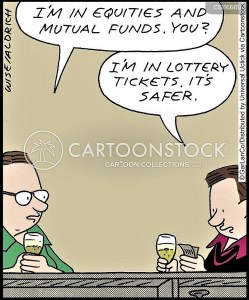
Be patient. Everything that’s worth building takes time. In between times, even if you’re not feeling lucky, a $2 lottery ticket wouldn’t hurt. 

Well, did you like this post? Please leave a reply – I always love reading your comments! 


Retiring WELL!

After what seemed like an endless year, I finally made the trip to Noosa, Queensland in early March. 

It was sad this time. My three aunts who moved from Sydney almost 30 years ago are no longer with us. My dear aunt Margaret and singing partner of the ’70s, was the last to pass away in August last year. I usually stay with my uncle-in-law Hans (he married Margaret’s sister Poppy), and he lives in a retirement village.

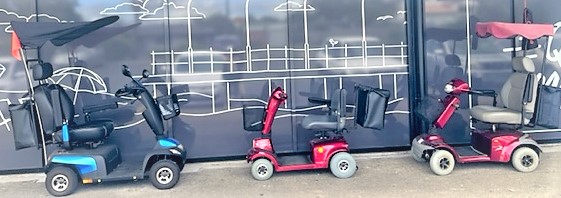
Hans’ calm, serene retirement village

Hans and I get on well. He loves my cooking, supports the Sydney Swans (only when they’re not playing against the Brisbane Lions!), and we laugh a lot. This time, I bought him a smartphone as I thought it was about time he had one. Amazingly he adapted to it quickly, though found it very frustrating at first.

Over the years, I’ve enjoyed long walks along the Noosa River, using the park exercise equipment provided along the way. I especially love the walking tracks in Noosa National Park. There’s also Noosa Heads along popular Hastings Street, with its beautiful riverfront cafés. Sitting there with nothing else to do but sip a cappuccino in a huge mug remains one of my delights. 
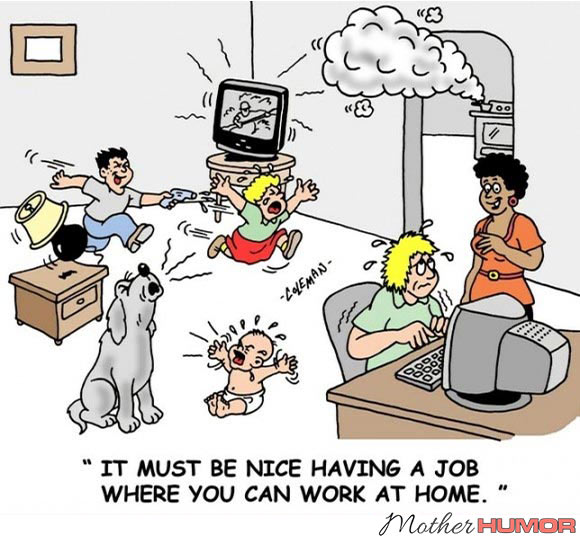
… and the lovely Noosa River & foreshore

But my favourite ‘thing’ is to walk around Hans’ village talking to residents. Almost all are retired, though some are professionals over 50 who still work. There are ex-pilots; trauma nurses; doctors; accountants; architects; engineers; software developers and electricians. Each has a story. Their lives, fulfilled or otherwise, contain important lessons we could all learn from. 

I ask myself if they could have been happier, wealthier or healthier than they are now. Could we use their experiences while we’re still young to plan how we’d like to live in our retirement? 

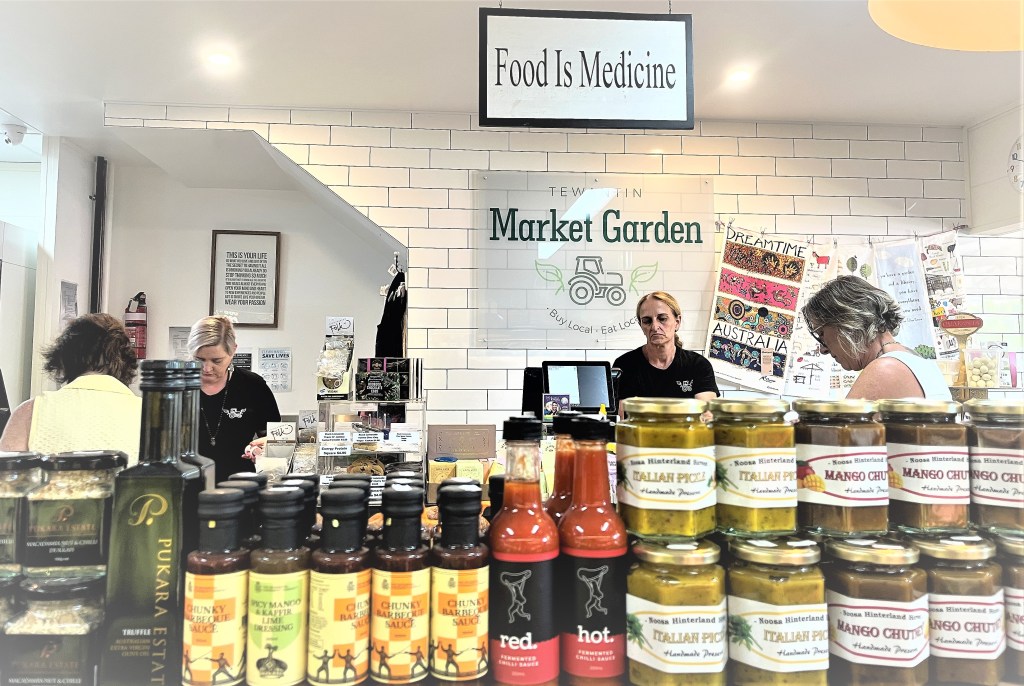
People in the village can access activities and outings almost every day of the week. The local bus drives them to a choice of shopping centres at least twice a week. The ‘Outlook’ retail centre is within walking distance – with a supermarket, medical centre, hairdresser, butcher, market garden, a delicious bakery brewing beautiful coffee, pies (try the beef and cracked pepper!), croissants, and my favourite: ‘banoffees’ (banana and caramel pies)! To those hosting Friday happy-hours in the village, there’s fish and chips and pizza for delivery and takeaway. Sounds like heaps of fun, doesn’t it?

But as in life, scales can tip the other way. There’s also the heartbreak of often living alone after a partner has passed away, and dealing with illness that may come with age (which really shouldn’t!). Sadly, death may come from chronic disease, depression, or simply ‘giving up’ because of loneliness and finding no-one to talk to or confide in.

Again, I see insidious bad diets taking over – now in the form of pre-cooked meals. It seems preparing raw salads and fresh food is “too much of a bother” when you’re older. It’s such a shame that the motivation just isn’t there. There’s no need to shop for food, spend time in the kitchen, or wash-up after – all you need is one cutlery set. Your time on a comfy armchair or at the computer is so much more appealing.

I saw heaps of these in Noosa and in the village. Remember what I said before about the benefits of WALKING?

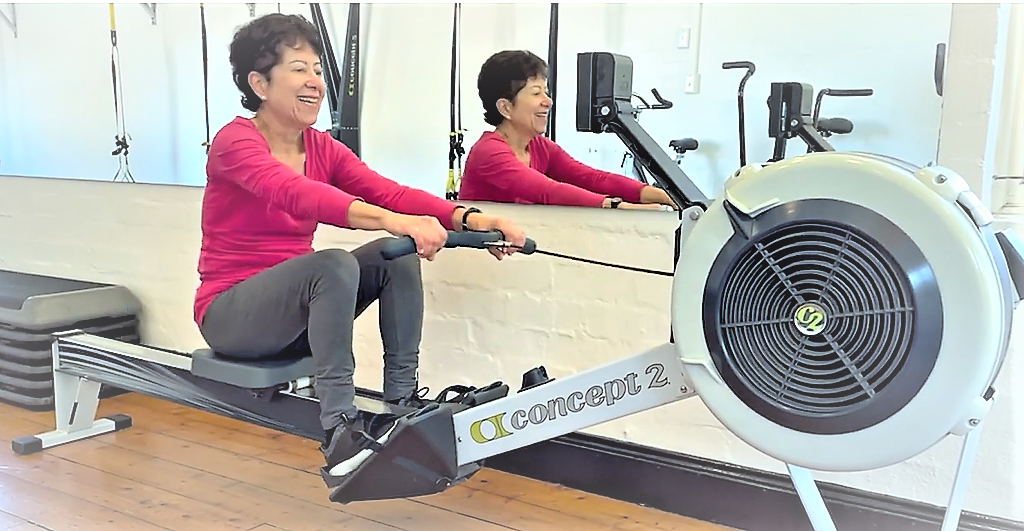
But you have a choice. I joined a gym at 68 – I’m now stronger, more stable and feel more alive than ever. So you too can get moving – NOW!! 

I also couldn’t also help but notice in cafés everywhere that each person had coffee with an oversized pastry/muffin/scone on their plate. I suggest sharing or keeping the other half for another day. I always have a sandwich bag handy for this. You’ll lose many kilos a year – and besides, the milk in your cappuccino will fill you up anyway! 

This is the era of fast food. From an early age, we buy into the “Why-cook-get-takeaway”? philosophy. This inevitably continues into retirement, and is a cause of declining health. 

Of course, the first thing I did after I arrived was to stock up on fresh salad vegetables, lemons, grapefruit and my favourite red papaya – all from a marvellous local grocer. I stuck to my morning regime of having my grapefruit and papaya first thing in the morning, before my walk and before breakfast.  

The importance of this came home to me holidaying in New York a few years ago. I thought “It’ll only be for a few days, it’s not worth going into a serviced apartment … we’ll just eat out.”

Wrong. After only 2 days of bottled fruit juice, cereal for breakfast, bistro meals and snacking between hop-in-hop-out coach tours, I was tired and irritable. Drinking more tea and coffee didn’t help one bit. I made a firm resolution after that: when I travel I must stay where there’s a kitchen and a supermarket or grocery store nearby.  

I now cook without extra salt, sugar or flavour enhancers, and enjoy every morsel. I drink coffee and tea when I feel like it and not because I need energy. 

Eating out? Here’s some good advice:

  1. Have a raw salad.
  2. Size of meals vary, so ask before you order. If it’s large, share it or take away half. 
  3. Don’t have gravy or thickened sauces with your dish.  
  4. Drink only water – or dilute a lemon-lime and bitters (yes, you may get laughed at!).
  5. Skip dessert. If it’s simply irresistible, pack it up and have a portion at least 2 hours later. 

This may be boring to many, and you might think I’m strange (not seasoned Pearlers, I hope). Isn’t life uncertain? We could all do the right things and still die prematurely! I agree – but I’m prepared to make this prediction regardless:

Medical research will continue to provide evidence of how the colon controls your physical and mental health and will protect you from chronic diseases. The 1001 diets we hear about in a nutshell? Have food that’s fresh, raw, rich with enzymes and fibre.

Timing them correctly is my secret to a Good Life!


Workplace Relations #5

Efrem’s comments in Workplace Relations #4 summed up the “chill” of modern human relations beautifully – and deserved a special response. But they also made me think … what really happened in the 90s “that made people lose their feeling for their fellows”?

Strangely enough, I believe one answer could be the introduction of … Microsoft Windows. At the hospital where I worked, typewriters and ‘dummy terminals’ were removed and replaced with bulky monitors and keyboards, with an instruction book and perhaps 3 hours of ‘personal’ instruction with trainers who were best left to their own devices (very few had teaching skills).

Months before this changeover, I enrolled in a MS Word evening course. I didn’t have the slightest idea of what it was about but I knew that it was important. I told my friends and colleagues to do the same but they were insistent “They will train us at work”. 

Well, “they” didn’t. The result was frustration, stress and longer work days. One night a week at a TAFE college for 3 months wasn’t really enough, but at least the icons on my monitor became friendlier and more familiar. It took weeks before anyone was comfortable with “cutting and pasting”, changing fonts, creating tables … and months before Excel no longer terrified us.

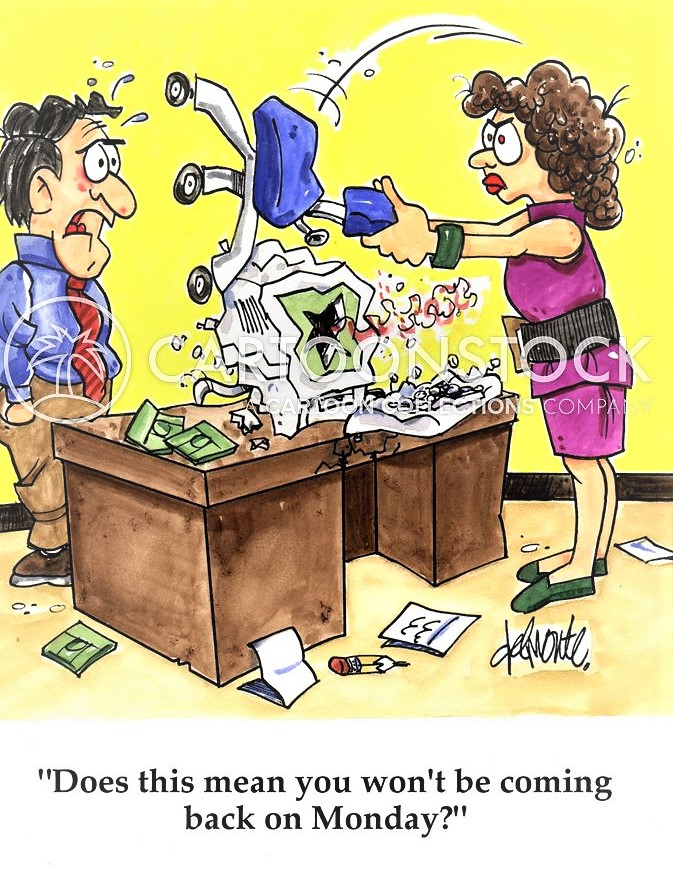
But in the meantime, I noticed we weren’t talking to each other, or asking “how are you” as often, or meeting up with friends for lunch. There was only: “How am I supposed to get this done before 4?” … “I feel like throwing this out the window”, or “Please show me how to create a header and footer!” The only thing that mattered then was to master this “monster”. Staring at the screen for hours, we were totally spent by the time we got home. 

Now this is true: We couldn’t stop laughing when a colleague pressed the ‘Help’ key and wondered why the IT person didn’t show up!!

As years passed, our confidence and proficiency grew. Computers and printers were upgraded every few years; they became faster and had more applications. And emails took the place of talking. New expressions began to replace simple words. I hated one in particular: “Please cascade this report to your team” (i.e. “please forward”). 

I was so fortunate to have “teened”  in the 60s – where we helped each other with our homework, shared our lunches and played hopscotch. In 1969, as a cadet journalist at the Sydney Morning Herald, our editor would yell: “Don’t give me a story without who, what, when and why!” Our chief-of-staff would pass by my desk with a reassuring hand on my shoulder. We’d laugh with senior reporters at our typos, and there was always someone who offered to walk me to Sydney’s Central Station when my shift finished at 11pm. 

By stealth, technology stole our sense of humour, our chats over backyard fences and our time. Now, it’s all about ‘AI’. Our future, our very existence, depends on artificial intelligence totally and completely. 

News travels in seconds. Journalism has become sensationalist and partisan, with important facts left out. Politicians have make-overs, voice coaches and speech-spin doctors. Anything that helps to win an election. What happened to good old “Tell it like it is!”, and hands-on troubleshooting? Advertising is in your ear every second, and is everywhere … “Buy this NOW!” … “Click here to lose weight” … “Remember to gamble responsibly” … 

Of course I do love my laptop and iPhone – where I watch, listen, learn, write and communicate anytime, anywhere. But my hands aren’t only used to clutch my phone and to text: they’re also used to console and reassure. I haven’t stopped smiling. Whatever we’re doing, thinking or worrying about, we can always smile. Try it. Frowning just strips your energy. I look at people and listen when they talk. 

I sing all the time; it relaxes me. I’d use music even at work. Our favourite song was ‘Manic Monday’ … 2 minutes before we took our phones off voicemail (guess when!). We sang ‘We Gotta Get Out of this Place’ after a bad day, and left work laughing. When my PC started to play up, I’d sing and groove to Stevie Wonder’s ‘Yesterme, Yesteryou, Yesterday’. Music has such amazing power – use it.

So let’s get over all this “selfism”. And THANK YOU, Efrem. The world we knew has changed, but we can make it better! 

Now if only ‘Apple’ meant that lovely, crunchy fruit that keeps doctors away …


The obesity epidemic

The authors of Eat Like the Animals, David Raubenheimer and Stephen Simpson, wanted to test their theory that our protein appetite has driven us to consume excess calories in a world where the food supply is dominated by fats and carbs. David and Stephen recruited a nutrition scientist, Alison Gosby, to design special menus to test their theory. She found that those on the lowest protein diets consumed 12% more calories:

[Extra calories] … come “not from people consuming bigger meals but instead through snacking … you might expect that sweets was to blame, but the increase came almost exclusively from the savoury-flavoured snacks that tasted of umami … on the high-carb/fat and low-protein diet, subjects were fooled into eating things that only tasted like protein but in fact were highly-processed carbs. … That 12% total calorie increase is more than enough to explain the entire global epidemic.”

(Raubenheimer, D. & Simpson, S. (2020). Eat like the Animals, pp.54–55. HarperCollins Publishers: Sydney.)

I see all this when I’m out shopping. The “coffee and a pastry” combo is now a fave option at cafés as being value for money. You’ll see at least one muffin, cake or croissant on every table. Shopping at the supermarket? Let’s grab a pack or two of chips while we’re at it (“love that new seasoning!”).

Fancy a browse through supermarket shelves? 

  • Biscuits: Laden with sugar, fats and ‘artificial flavours’ … but now with ‘Murray River Pink Salt’ (or ‘Himalayan salt’). Salt is salt, folks. And if you read the labels, they’re adding much more of it.
  • Rice crackers and rice puffs: ‘Sweet and Salty’ inside separately portioned ‘snacks’. Wow, what a perfect combination – you’re hungry, a portion wouldn’t hurt. 
  • Marinated meats: You’ll find them in chicken, meat and fish said to make for ‘easy cooking’. But please read the label. ‘Sodium’ is there, more than necessary. 
  • Ready-to-eat frozen and canned foods: You’ll need a full minute to read the ingredients. Among them will be modified starches, reconstituted fruit juices, soy and vegetable protein extracts, vegetable oil, food acids and of course ‘flavour enhancers’ (aka salt).
  • Chips, chips, chips: “ … artificial flavourants to make cheap, starchy and fatty foods such as potato chips taste savoury like protein.” (Raubenheimer & Simpson, p.153)
  • Fizzy drinks: Just have a look at the sugar content in plain old soda. 
  • Plant-based packaged foods: Now on dedicated shelves (I checked them out). I heard one Mum ask her 2 children (aged about 10–12), “Which one would you like for dinner?” I was so tempted to take one of those off the shelf and read the poisonous list of ingredients aloud

“ … increasing market share – sometimes known in food industry circles as stomach share – is a powerful force that shapes our food environment … Cocktails of chemicals are added to improve the color, texture, flavour, odour, shelf life … and the mixtures are packed with cheap fats, carbs and salt.”

(Raubenheimer & Simpson, pp.152–3)

Everything in the list above, if eaten regularly, will slowly destroy your colon’s ability to protect you from viruses and chronic disease. Your metabolism will slow, your moods will fluctuate, and weight gain is inevitable. And here we are, in this technology-charged age of abundance, consuming trolleyfuls of cheaply-produced foods to satisfy our protein appetite. 

To me, the key point here is BALANCE. According to Raubenheimer and Simpson, we have 5 appetites

  1. Protein 
  2. Carbs 
  3. Fats 
  4. Sodium
  5. Calcium.

“These nutrients have been singled out by our evolution for special reasons. One is that they are needed in our diet at very specific levels – neither too much or too little.” (p.25)

But what about the other essential nutrients? The entire range of vitamin groups plus minerals like potassium, iron, zinc, magnesium? Our natural diets are rich in these. By eating the right amounts of the ‘Big 5’ – especially with raw fruit and vegetables – you automatically get enough. Be mindful that supplements don’t work as well, if at all, if you keep eating rubbish

Here’s how you can properly balance your diet, keep your colon happy and your weight down. I’ll use breakfast as an example of foods with each of the Big 5: 

  1. Lots of water, citrus or any preferred fruit. Wait 25 minutes. 
  2. Then have either rolled oats, kefir yoghurt, honey, sultanas, almonds, walnuts or sunflower seeds (nuts can be ground together). Take this to work if you need to rush out. 
  3. Or have toasted Turkish or sourdough bread with a good slice of cheese or an egg. 

You’ve made your Big 5. For more meal suggestions, read ‘Your natural detox’ in Diet & Your Colon menu. This is critical to your well-being, so be prepared. When you’re out, take an insulated bag with you filled with at least one of these items: 

  1. A cheese sandwich
  2. Scrubbed apple (if pre-cut, squeeze lemon juice to prevent oxidation) 
  3. A peeled carrot ready to chew 
  4. A container of almonds, walnuts or sunflower seeds with a fig, date or dried pear. 

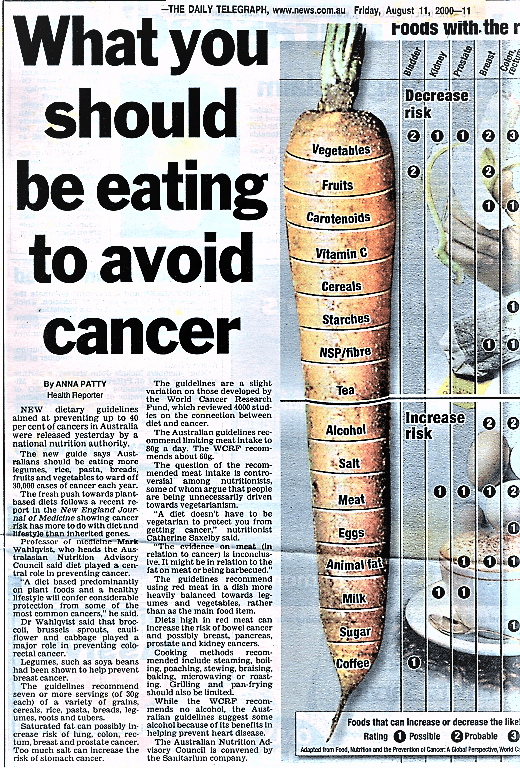
In fact, the carrot is my favourite vegetable. It’s nature’s all-in-one’ most valuable and complete food. Click here for my short video on it. 

If you see me at the supermarket before dinner time, I’ll be munching and crunching. Hope you will be too – but if your feet still take you to biscuits and chips, read the labels

Satisfy what your body needs and your cravings for these awful foods will slowly disappear. Have your muffin and cake if you feel like it, but share half with a friend or wrap it up for another day. 

GET SMART, PEOPLE!!


Workplace Relations #4

A big THANK YOU for your lovely comments on Workplace Relations #3 – they so encouraged me! But I did leave out one important issue in that post.

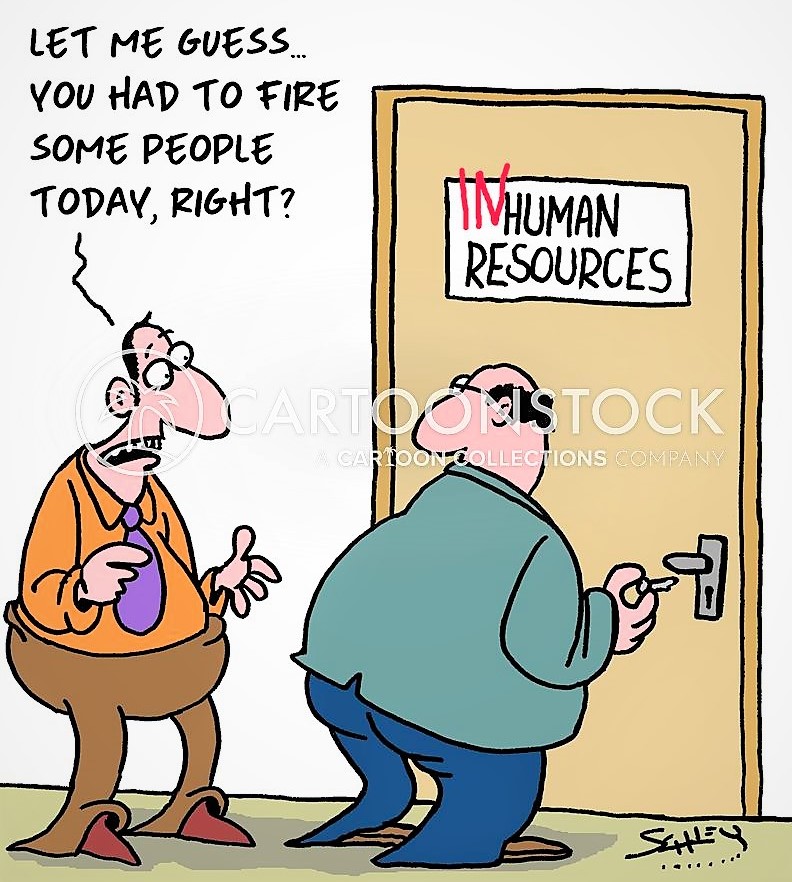
Have you noticed how inhuman HR and the recruitment process have become?

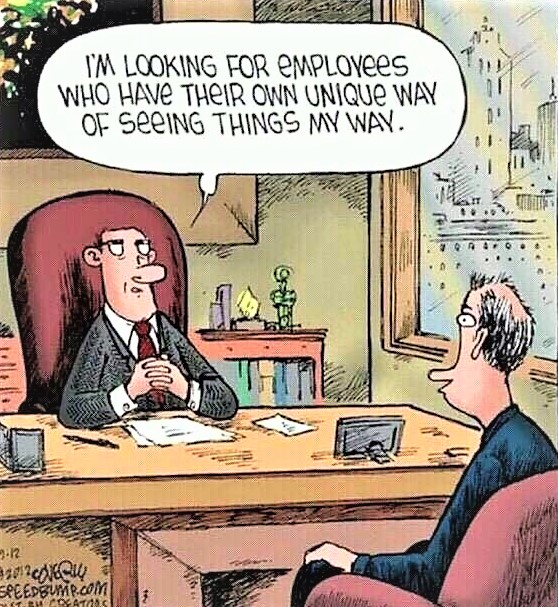
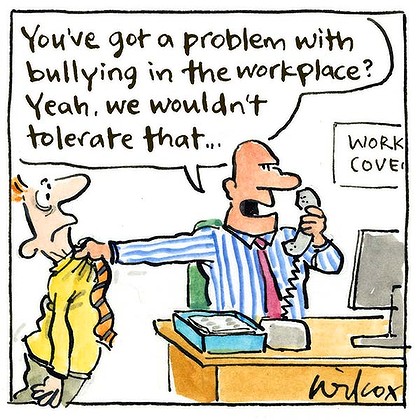
Or the manner in which our dear managers and team leaders conduct themselves? Delusions of grandeur strip them of all kindness; they look away at any sign of conflict in their team, avoiding problems “too hard” to handle. 

Observe their body language: those side glances and facial expressions when they think no-one’s looking tell all. Maybe it’s your age, clothes, how you speak, your personality (if this clashes with the manager, you haven’t a hope), or even your postcode.

There’s also the “fear of being outclassed”. Notice how promotions go to those who don’t threaten managers’ egos? It’s so sad to witness. Shouldn’t we all feel comfortable and secure at work? 

Ironically, organisations preaching “collaboration, openness, respect and empowerment” with other core values of integrity, trust and accountability are often the ones that fall short when it comes to choosing the right leaders to set those examples.

The first introduction to a company begins with the dreaded interview. Your emailed CV may not always be acknowledged. If you’re lucky, you’ll receive a call or text message with an interview time; no response after the closing date means you didn’t get to first base. 

After I began at Sydney’s Prince of Wales Hospital in 1981 to the time I retired in 2016, I didn’t attend further interviews for any new positions. When I started, a friendly manager hired me for a temporary stint, which became permanent. It was the 80s – when positions were advertised in newspapers. People would walk in, fill out applications and wait for the response. If it was positive and applicants were interested, interviews were organised. If not, their forms were kept until other roles came up. Interviews were always with personnel and department managers. It was over a cuppa, there would often be some laughter, and the interview would end 10 to 15 minutes later. We’d call them back, and I loved hearing their voices lift when we said they made it. But we also called back the ones who didn’t, and encouraged them to apply again

When I later moved to payroll, I noticed that from the mid-90s human contact in HR slowly dwindled. Then from about 2012, time and cost-saving technology further changed how applicants were treated. It became arduous, frustrating and demoralising for them. Good luck trying to talk to someone today – anyone – to help you navigate several pages of questionnaires, devised to justify jobs of bureaucrats. And if you’re granted an interview, REJOICE! 

Now, personal contact is almost nil, and the entire recruitment process is done online with more forms laden with jargon. A multi-paged ‘Code Of Conduct’ is usually given to employees to sign if they got the job; disclaimers have become paramount to free employers from any legal liability. 

In payroll, I was twice asked to sit on an interview panel. We were given sheets of paper with specific questions – so many were irrelevant and had little to do with actually getting to know the person. People became more nervous and fumbled their answers; I recall them waiting in another room before interviews. I’d go up to them with a smile, make tea and tell them to take slow deep breaths. It was amazing to see how those few words gave them so much comfort! Human resources.

It’s now a cold, unwelcoming atmosphere – that may only warm up when a younger, smooth-talking applicant comes in. The panel nods in agreement: yes, that’s the “better” candidate, and makes its decision. 

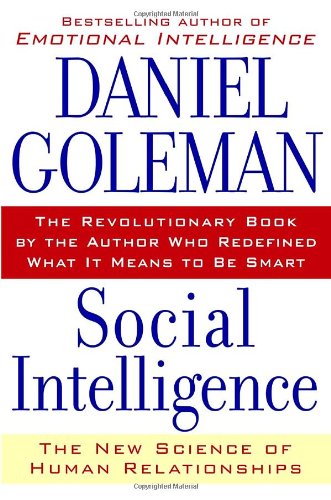
As with virtual interviews, negative or positive assessments are already made in the first minute. Daniel Goleman sums this up nicely: 

“ … once a negative bias begins, our lenses become clouded. We tend to seize on whatever seems to confirm the bias and ignore what does not. Prejudice in this sense is a hypothesis desperately trying to prove itself to us.” 

(Goleman, D. (2006). Social Intelligence, p.300. Random House Australia (Pty) Limited: Sydney, NSW.)

Does your actual ability or aptitude actually matter after that? 

A year after I retired at age 68, I decided to apply for a part-time position in NSW’s local health network. On the panel were people I knew well during my time in payroll. I greeted them with “Good morning, so nice to see you all again”, but not one smiled back. They muttered, stared at their sheets and were in disbelief as to why I’d apply for a job at my age. I knew I was wasting my time. Calmly I got up and said, “Sorry guys, I changed my mind. Please call in your next applicant”. 

In-person interviews

  • Arrive at least 20 minutes before. Take slow, deep belly-breaths for 10 minutes. You’ll feel a lot calmer.
  • When you’re called in, shake hands firmly and make direct eye contact with the interviewer/s. Now look around you. Is there something in the room that you can positively comment on? A picture, the view from the window? Flowers on the table? An honest compliment always helps, and breaks the ice.
  • If you’re asked a question you’re not prepared for, say something like: “I don’t know the answer to that question, but I’m sure it’s something I could easily tackle once I’m in the job”.
  • How would you react to certain situations? (a psychological test no doubt!) Answer honestly, and don’t feel the need to fudge anything to impress the panel. If you need a little time to think of a particular situation, say so.
  • Be comfortable and at ease in the room, keep direct eye contact and never shift your gaze. Make your answers short and to the point – and only offer your opinion if you’re asked for it. 
  • Before leaving, shake hands with the panellists and thank them for their time. 

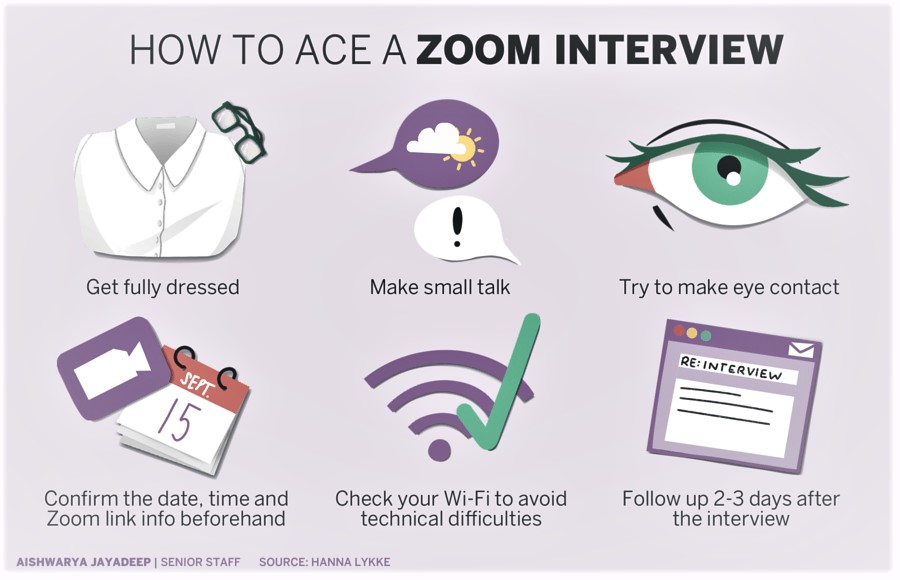
Zoom interviews

  • Decide in advance where you’ll be ‘Zooming’ from: choose a room that’s well-lit and free of distractions (including background noises which could disturb you or the interviewers).
  • Keep your virtual background simple: busy backgrounds are distracting. A clean and tidy space may not need a background at all (which may be a positive to show some of your personality to potential employers!).
  • Consider using an unobtrusive headset: it can help you hear the interviewer more clearly. Use common sense – AirPods are good, gaming headsets aren’t. A quiet space without ambient noise is even better.
  • Invest in a good USB mic.
  • Check your internet connection and ensure your camera and mic are on.
  • Double-check the interview time: especially if there’s a time difference. It’s wise to click on the Zoom link 5 minutes before.
  • Men and women: dress smartly and be well-groomed (hair, fingernails, teeth, etc.). 
  • Keep your arms on your desk: hand movements on video will be exaggerated and can be annoying. 
  • Limit your facial expressions: they can also be distracting on screen.
  • Speak clearly, not loudly: sound through the mic can be distorted; it’s fine to ask if your voice sounds OK.

Facing HR

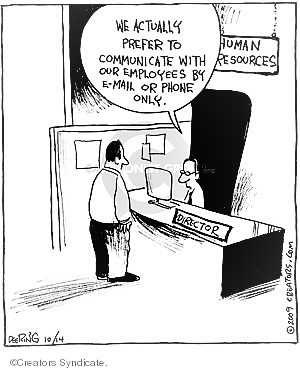
  • No surprises: they prefer emails to personal contact and always take the side of department managers!
  • You might have no option but to directly meet with them for a difficult work issue (especially if it’s with your team leader/manager). Bring along a union rep and/or 1–2 colleagues (they might change their mind if you ask for their support!).
  • If you’re meeting HR alone:
    – write down what you want to say beforehand
    – give at least 1 example of an incident or behaviour you felt was unacceptable
    – if your team leader is #3 on the power grid, get the names of #1 and #2
  • Speak calmly: never raise your voice or show any hint of emotion. Smile. It helps to do 10 minutes of slow, deep breathing before you get there.
  • Make your intentions clear: e.g. you’d like HR to arrange a meeting with your manager and #2. Tell them to expect an email from you; send a copy to your managers, adding details of your talk with HR. 

Workplace Relations #3

We learnt the basics of work relationships in WR #1 and #2. This week, I will give you examples of how I put my observations into action. The results were interesting to say the least!

My key observation? First impressions are usually wrong

Have you noticed that the emotional reaction or ‘vibe’ we experience when meeting someone for the first time can be extreme? It’s either “What a lovely person – I think I’ve found a friend!”, or “I’m not going to waste my time talking to this person – I DON’T like him [or her] at all!”

Much wiser now, I keep my opinions on hold. Time will tell whether I was right or wrong. In the meantime, I tread carefully. 

But time can also shake your faith in people. A close friend or loved one you’ve known for years will say something completely out of character that disappoints and distresses you. 

Bewildering isn’t it? But there MUST be a reason. If it deeply affects you emotionally, find out why and do it quickly

Now for some examples of how a few words – and a smile – can turn someone you thought was mean and unpleasant into a person you could learn to be friends with. (These are actual work colleagues, with names changed for privacy.)

Example 1

Cassie was in her late 20s and a wiz on every Microsoft application. She was attractive, super-efficient, and among the manager’s favourites – a position she flaunted. But I was not one of those she liked. I was too “old”, and I could sense her thinking, “How on earth did Shirley get to stay in that job for so long??” I admired her skills regardless – and the way she dressed and her work ethic. Her desk was close to my office and I badly needed someone to help me with Excel. It was worth a try …

Cassie had many photos around her workstation. Some with a good-looking young man, some wearing her football team’s jersey and lovingly hugging her dog. I felt a pet-lover couldn’t be that mean! Here’s what I said to her one Monday morning after watching Sunday night’s sports report: “Wow, you must have had a good weekend – Easts thumped the Broncos [Aussie rugby league teams]. They were awesome!! Did you watch it on TV or were you at the game?”

The change in her manner, body language and facial expression took me by surprise. She immediately turned away from her PC screen. Smiling, eyes alight, she said: “Yes it was so good, Shirley! I was at the game with my boyfriend. Didn’t know you followed NRL?” “Yes, I do like rugby league, though I prefer AFL”, I said. 

Now guess what we talked about every Monday? My team and hers! Our conversations led to discussions on fashion, saving money for her wedding and of course, her dog. When I asked, she guided me through my computer conundrums. 

Example 2

Salim was in his early 20s and worked in our cafeteria – his first job since migrating to Australia from Bangladesh. He wanted to know more about the hospital’s salary packaging and tax-free fringe benefits. He was shy and withdrawn – but he listened intently while I explained the process, and how much he would receive tax-free each fortnight. Although his English was not perfect, he asked intelligent questions. He grasped the concept quickly. 

At the same time, he would anxiously look over his shoulder, feeling he was taking up my time as there was a queue outside. He was about to get up when I asked, “Salim, what was your profession in Bangladesh?” His eyes lit up. “Oh Mrs Shirley, I was a bookkeeper and studied computer engineering; but as my English is not so good the only job I could find when I came to Australia was in the cafeteria.” “I can tell you’re smart, Salim. Stay in this job, study part-time. You will do very well – in a few years you could be working in IT!”

Salim did exactly that. Four years later, he was married with kids – a confident young man speaking excellent English and earning much better money as one of our IT consultants. And guess who I could always call to help “fix” my computer??

Example 3

John was in his 40s and one of our team leaders. He was an expert in payroll, but very moody. Was he smiling that day or did he always have that scary scowl?, we’d asked each other before approaching him. He did like a good joke though – but what caused his rotten moods? I followed him outside at one of his smoke-breaks. 

“John, could I please ask you a payroll question? I know only you would know the answer.” “Of course”, he said, solving the problem in a minute. Then I said, “I love working with you, John – you have such a good sense of humour – but you’re a worry when that thundercloud’s above your head!” Laughing, he put his hand on my shoulder. “I’m so sorry for that – I’m on medication for an immune-system condition. It does make me feel down in the dumps sometimes”.

So now we knew! 

Young and naive as I was in the first 10 years of my working life, I believed I had an abundance of many other things people wanted. Les Giblin’s “Triple-A Formula” includes the essentials: 

Acceptance. Don’t insist on anyone being perfect before you can like him” [or her]. 

Approval. Look for something to approve in the other person” [no matter how small or insignificant]. 

Appreciation”. Don’t be “stingy” with your praise and never forget to say thank you.

(Giblin, L. [1956]. 1986. How To Have Confidence and Power in Dealing with People, p.68. Prentice-Hall Inc.: Englewood Cliffs, New Jersey.)

It is rare these days to walk into an office and see smiling, happy faces. Why? I believe managers now put themselves first, their “favourites” second and their staff last. What a surprise!

The bully (a team leader?)

“ … the arrogant person, who attempts to “put you in your place” or make you feel inferior, is really suffering from a low opinion of himself [or herself]. Keep in mind two things: Firstly he needs desperately to increase his own self-importance and is attempting to do so by beating you down, and second, he is afraid.”

(Giblin, p.16.)

I was in my late 40s when I read Giblin’s book, and decided to put his theory to the test. I approached my team leader Liz after hearing her criticising a workmate in front of us. I went to her office a few minutes later. “Liz, can we talk?” Surprisingly, she asked me to come in.

“Liz, it was embarrassing for us to witness what just happened. It’s not like you at all. What was wrong?” I was not angry, and more concerned than critical. Instead of making a blunt statement, I asked a question. Her answer was what I suspected. She had low esteem, and wanted approval and respect. She thought the way to achieve this was to be assertive, and to act “like a boss”.

I said to her: “I believe there are better ways to do this, Liz – I’ll leave 2 books on your desk tomorrow”. Before I left, wrote this for her:

A great man shows his greatness by the way he treats little men.” 

Thomas Carlyle (1795–1881), Scottish historian and essayist

I know this WR post has been long – but it was important enough to spend more time on! 

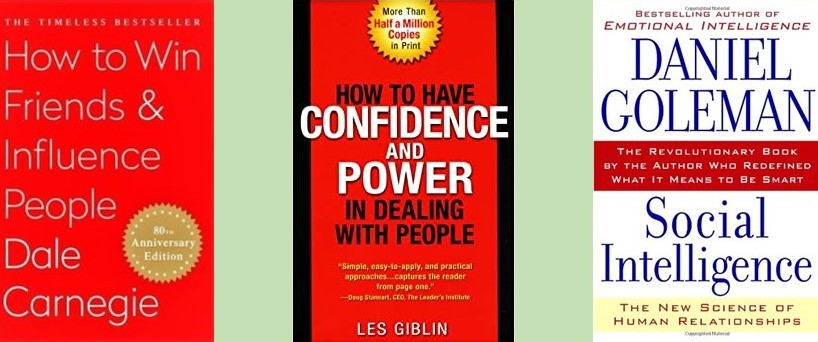
If you’re in a job or in your own business, please read these books: 

Human nature hasn’t changed. We just need to learn how to deal with each other. It’s such an important part of My Guide to a Good Life!!


Workplace Relations #2

In Workplace Relations #1, I spoke about the art of passive observation. How do you do it? 

As a start, find a few moments away from your smartphones and airpods – and use the time to connect with life and people

Daniel Goleman’s book Social Intelligence described technology as the “continuing invasion into our daily lives”: 

“… Our most potent exchanges occur with those people with whom we spend the greatest amount of time day in and day out, year after year – particularly those we care about the most.”

(Goleman, D. 2006. Social Intelligence, p.5. Random House Australia (Pty) Limited: Sydney, NSW.)

I used to spend at least 9 hours a day at work. I was paid for 8, so the extra hour was my own choice; it was spent engaging with staff and employees during the day. Why did I do this? 

Daniel Goleman again: 

“Neuroscience has discovered that our brain’s very design makes it sociable, inexorably drawn into an intimate brain-to-brain linkup whenever we engage with another person. 

 … our relationships mould not just our experience but our biology … nourishing relationships have a beneficial impact on our health, while toxic ones can act like poison in our bodies … science now tracks connections between the most stressful relationships and the operation of specific genes that regulate the immune system.”  

(Goleman, pp.4–5).

Eight hours … in an environment that was at times frustrating, infuriating, and which could sometimes make you physically sick. But did I want to get home mentally depleted and unable to sleep? NO! 

Thank goodness for Network 21 and the books they recommended – and also Dale Carnegie’s How to Win Friends and Influence People which I highlighted in WR #1 last week. 

Getting along at work

Now here’s where I learnt how listening and observing are crucial for good work relationships: but you first need CLUES to put your new skills into practice. Here are some:

  • Do you know your colleagues’ football teams? Some wear their team colours on a Friday before a game, or on a Monday if their team wins. Mondays are the best time to hear about teams that won or lost!
  • Observe their photos. These may be of their partners, children, pets, travels or cars. They’re there. Have a look – you’ll inevitably hear conversations about them.
  • What’s their personality? Attitude? Trustability? This is the most obvious. If they are definitely “not your type”, stick to work-related chats, be polite, and always acknowledge their presence with a “Hi” or “Good morning” when you first see them, and “See you tomorrow!” when they leave. Keep doing it even if they don’t respond! 
  • What’s their work ethic? The really lazy ones don’t last anyway, so they quickly came off my list. Those who were younger and smarter helped me learn computer skills which I needed to get better at.
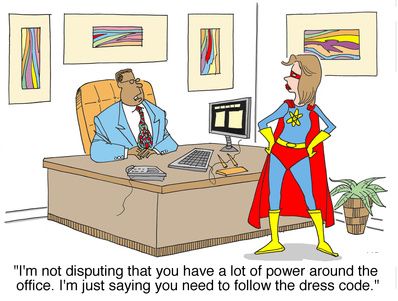
  • Physical Appearance? Is it sloppy? Dishevelled? Or are they smartly dressed, striding in with heads held high, looking immaculate? (Sorry, but I couldn’t resist adding that “overdressers” created much amusement in my payroll department – was there really a need for stilettos, bowties, or excessive bling??)  
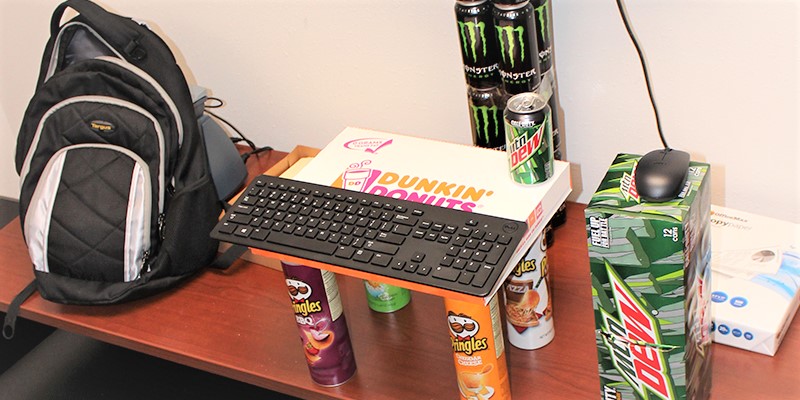
  • Observe their health. Are they overweight? Do they carry an array of tumblers, protein shakes, and pre-packaged meals to the kitchen? Are they addicted to soft drinks, caffeine or nicotine? Are their desks laden with codeine, aspirin or other painkillers? Are they walking slowly, dragging their feet? And lastly do their eyes appear dull, sad and with dark rings? 
Get the picture??

Your clues tell a story – whether you discover them at the office or on a screen in WFH. 

Dealing with ‘those’ days & work upheavals …

Yes – those days when we’re frazzled. At such times, I’ve asked myself, “Why am I even here??” – and tempted to grab my bag and leave for good. Remember that while in this state, we cannot think clearly and should never make important decisions. A simple method I use to calm down is to picture myself smiling. 

Les Giblin in his long-established book says:

“It’s almost impossible to be worried or anxious while you’re smiling. A smile is relaxing. A smile shows confidence.”

(Giblin, L. [1956]. 1986. How To Have Confidence and Power in Dealing with People, p.74. Prentice-Hall Inc.: Englewood Cliffs, New Jersey.)

My last 15 years at work saw a record number of restructures. There was huge uncertainty and pressure; morale was low, and no-one smiled. 

Next week, I’ll tell you how each clue gives you enough information to trigger a positive response with just a few words. 

For now, to use Giblin’s term, don’t forget your MAGIC SWITCH: a warm, sincere smile that will bring out a friendly feeling in the other person almost instantly! 

I know all of us have lovely smiles. Let’s use them more often. You’re sure to get one back!! 


Workplace Relations #1

I was about to write a post on this subject just before COVID struck. That same week ‘WFH’ became the latest buzzword, and my article fell into the ‘Keep for Later’ tray.

Our workspaces were now in our homes, laptops were provided (if our PCs were dinosaurs), and we were shown how to install the new ‘Zoom’ app (move over Mazda!). 

What BLISS!, we thought. No more buses, trains, traffic, piling leftovers on lunch sandwiches, looking for car keys, remembering our phone … Bad breath or body odour? No worries. This time, it’s only me, the cat, the dog, the children, or our partners. 

But we also easily forgot that we needed to look presentable for ‘zooming’ – once we figured out how to use it. Ladies began slapping on make-up, grooming their hair and wearing nice tops. Guys now had the excuse to grow beards, but had to ensure their underpants didn’t show (many thought it wiser leaving their trackies on).

Two years later it’s still WFH, with near-empty offices in major cities on Australia’s east coast, and even in Perth’s CBD I’m told. But as I re-read my draft article, it struck me that even after many Zoom sessions, what I had written before was relevant: whether on camera or in the flesh, we will still reveal our strengths, weaknesses and idiosyncrasies to each other

While it’s not “Shirley who works on the front counter”, it’s still “Shirley who has that interesting mural behind her desk …” 

WFH has also made it difficult to maintain (and sustain) our ‘office’ or ‘business’ personas: we get too relaxed and easily drop our guard on video calls. Of course, wearing trackpants and having people, pets and young children around doesn’t help. Colleagues will invariably see their co-workers behave very differently in this environment. Office chatter would now be mostly domestic (“I have to teach little Joey not to barge in!”). Unfortunately, no one can hide on camera. 

Can we still maintain good working relationships?

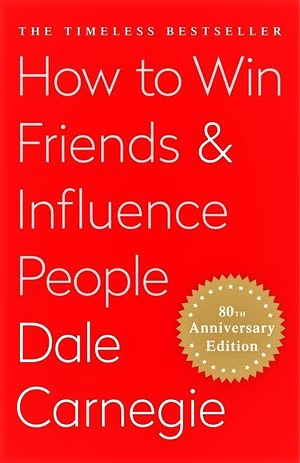
Dale Carnegie’s “How To Win Friends and Influence People” is one book I’ve kept reading. I first saw it in Mum’s cupboard when I was 16. My 1981 edition reads: 

“Some of the things most people want … Health. Food. Sleep. Money and the things money will buy. Life in the hereafter. Sexual gratification. The well-being of our children [and I’d like to add our families]. A feeling of importance.”  

Carnegie, D. [1936] (1981). How to Win Friends & Influence People [Revised edition], p.48. CollinsAngus&Robertson Publishers Limited: Pymble, New South Wales.  

Carnegie also quotes from William James: 

“The deepest principle in human nature is the craving to be appreciated. … Here is a gnawing and unflattering human hunger, and the rare individual who honestly satisfies this hunger will hold people in the palm of his or her hand.” 

Carnegie, p.48.

Almost 90 years on, has anything changed?

In my 40 years dealing with colleagues and staff in payroll, I made a list of the ‘Least Likeable’ types of people. Yes, these are the few who make all our lives difficult:  

  • Attention seekers: They want all of your sympathy, admiration or approval 
  • Bullies: They attack as soon as they perceive your weak spot
  • Complainers and whingers: Simply annoying 
  • Fibbers and phonies: Be wary – they trick you into trusting them
  • Gossipers: They only need to see someone at work holding hands with X’s partner to spread the juicy news all round the office 
  • Self-Opinionated: They’re never wrong; if they make a mistake, it’s someone’s else’s fault
  • Show-offs and know-alls: Hmm … what do I know that they don’t?? 

You’ll find 1 or 2 of them popping up in your workplace at the very least, including those in higher positions who should know better! 

In payroll, most of the staff who called in to see us were kind, sincere and appreciative. I wondered why everyone else couldn’t be like them. It would make each day at work a happy one – and every Zoom call delightful. 

But alas, human nature is complex. People can be quite nasty and make life totally unbearable, but they allowed me to practise the people skills I had learnt. No more the shy, defensive girl from Singapore, I worked the phones, asserted myself and took up the challenge!  

This week, I’d like you to PASSIVELY OBSERVE people in your workplace. Listen and watch their likes, dislikes, attitudes and habits. And importantly, don’t be judgmental. Make notes if you like, but keep them at home!

Such observations are crucial – especially when you’re forced into having a conversation with that fellow worker who’s been giving you insomnia! 

But HOW do you deal with difficult people? I’ll tell you next week.


February 2022: Bearing with ‘the Bear’

“I feel like an oversexed man in a harem. This is the time to start investing!” (Warren Buffett)

At Wall Street in 2011 – I know that sinking feeling …

That’s so typical of Warren: a man who actually gets excited when share markets tumble. And you know what? I can relate to him and so did my Dad’s share clients in days past! 

The ones who “gambled” and realised they “should have listened” to him panicked – they rushed to sell and lost heaps. Others, groaning with palms on their foreheads, did what Dad told them to do – they went to Changi Beach for a swim and had chilli crabs for lunch!  

Of course, it’s awful seeing your shares plummet to much less than what you paid for them. It hurts your pride, it lowers your confidence and leaves you feeling sorry for yourself. In 40 years of investing, I’ve experienced the same despair at least a dozen times.

Stocks which are fundamentally strong, have dedicated teams running healthy businesses, and pay regular dividends will always bounce back. Some will even exceed their previous highs.  

In the meantime, remember that the market doesn’t care about fundamentals in a crash or correction: it actually flattens every sector until it’s had enough … and Buffett and other investors with spare cash will stand ready to buy when that happens.

I wish I could tell you when it’s time to buy. There are days when recovery looks certain to continue – but just when you think “Now!”, it flops again. It’s what we call “a dead cat bounce” – but will it happen 9 times before the worst is over? I don’t know. 

However, I am an old hand. The sharemarket has always captivated and fascinated me. I know by now that not even the best financial commentators can pick the right times to buy and sell.  

So what do I do? I rely on my instincts and they are right (most of the time). All that’s missing from my share-gazing crystal ball is hindsight.

Basically, it’s only a game of assessing the odds – just like picking the right horse: 

  1. STUDY. Know the horse’s history and its lineage. 
  2. SELECT. Don’t wager more than you can afford to lose. 

That’s how to do it! 

February Share Updates

(Thank-you to Sam who helped compile the Table)

Comments

  • Australian Agricultural Company (AAC): No further announcements since their half-yearly report was released on 26/11. But cattle futures have been going up.
  • Cleanaway (CWY): Hit a high of $3.17 on 4/1, recovering quickly from the correction last week. I think companies involved in battery recycling – or, in the case of CWY,  household and commercial waste removal – are well worth looking into. Hold or accumulate!
  • Humm Group (HUM): Entered into a non-binding agreement with Latitude for the sale of its consumer business on 6/1– board still undertaking due diligence. Private equity firm Cerberus Capital tipped to acquire the rest of its business – see article in The Australian on 25/1. One of only 2 domestic BNPL companies currently making a profit. 
  • Poseidon Nickel (POS): Significant NiCu (nickel-copper) intersection assessed as very high grade. Read announcements made on 21/12/21 & 27/1/22. Production stage being planned with feasibility study in progress – final investment decision expected in July 2022.
  • Volpara Health Technologies (VHT): Tech stocks like Volpara were not spared in last week’s correction. I’m not concerned – Volpara’s Breast Health platform is the most clinically validated in the industry, and the trend towards more personalised breast health care is gaining momentum – see the investor newsletter released on 22/12/21. Q3 results come out on 31/1/22.
  • I’ve been keeping an eye on Adairs (ADH) and Accent (AX1) since Motley Fool recommended them in one of their previous newsletters. Both didn’t perform well in the last quarter, with lockdowns, supply chain disruptions and labour shortages mostly to blame. Online sales were still robust, but foot traffic was down. Both are trading well off their highs, but I’m ignoring that – think long-term. ADH in particular looks too tempting to ignore at current prices – I hope to add it to my portfolio next month!
  • Meanwhile, in the resources space, metals, minerals and rare earths – among them lithium, nickel and tin – are HOT!  
  • Lithium is a vital mineral in rechargeable batteries (including the one in your smartphone) – that’s why it’s called ‘white gold’. High demand has seen lithium prices soar in recent times, but there is a catch: lithium mining is far from being environmentally friendly. Sam will discuss this in a future instalment of Sam’s Corner

On a happy note, I’d like to share part of what I read in Motley Fool’s 27 January post, ‘Dealing with Market Stress’ (I subscribe to their ‘Share Advisor’ and ‘Extreme Opportunities’ newsletters): 

“Bear markets are tough. Emotionally and financially. Remember, though, you are not alone in feeling the pain, and there are strategies that can be put in place to mitigate that pain … bear markets do end. And I believe that those who stay the course will be rewarded in the long run.” 

When all’s said, what should be done? 


Nourish your body and you nourish your brain. You CAN achieve wealth, success and happiness – but only with GOOD HEALTH. And that starts with the COLON!

This image has an empty alt attribute; its file name is bull-outside-wall-st-1.png
No Bear outside Wall Street, just the Bull – make it yours!