Invest 5.0: Personality!

Do you realise that your personality type is critical to your initial and ongoing capacity to invest? It’s so close to home, yet it’s one thing we overlook (or choose to). 

Maybe I should distinguish between personality and temperament

What we all see is your personality: it’s the face you put on. But your temperament is what you are underneath.  

I first learned this in the book Personality Plus by Florence Littauer – a delightful author whom I actually met at a seminar 30 years ago. Reading it made me realise how important it was to understand our inner selves, as she writes: 

“Know what what we’re made of
know why we react as we do
Know our weaknesses and how to overcome them.”
1

This jazzy, fun chart compares the 4 temperaments we apparently have: 

Similar to the chart, Littauer says: 

  • The sanguine’s “optimistic, cheerful and bubbling”
  • The melancholic’s “analytical, detailed, perfectionist”
  • The choleric’s “adventurous, confident, productive”
  • The phlegmatic’s “patient, obliging, consistent, laid back”.2

Decide which temperament you are – but you could be a mixture of them! 

Littauer also gives us a very thorough checklist of strengths and weaknesses to determine our dominant and less dominant personality traits. Please get her book if you can (it’s had numerous reprints). 

So it’s quite clear that by understanding ourselves, we learn to understand others – so important in business and personal relationships. But it’s especially important in INVESTING, where your temperament is key to your ability to make right decisions.

TIP:  Want to be successful? Work on your weaknesses and enhance your strengths!

My dear Dad, in his innocence, knew this. He matched stock recommendations with what he called his clients’ “moods”. Here’s one example.

A wealthy, well-known lady – we’ll call her ‘Patsy Leow’ – used to frequent the Singapore Turf Club in the old days. She loved picking ‘outsiders’3 – but most of her money went on horses with short odds, or ‘favourites’.

Gorgeous Madam ‘X’ is a dead-ringer Patsy Leow! 

 When Madam Leow asked Dad for his share tips, he chose those “that will never go down” – solid companies with increasing yearly profits and paying healthy dividends. He also told her of 2 or 3 shares he liked that were “cheap now but had lots of potential to go up in price”. Her eyes lit up and she said, “Yes, Alex, we’ll put a few thousand on those!” 

Such speculative stocks kept Madam Leow interested: she liked the challenge and excitement in picking a winner that would eventually pay well, and she came back for more. 

So for all you optimistic choleric and sanguine risk-takers – who enjoy a good punt and love to talk about your wins, ‘speckies’ have great appeal, and you’ll likely go this way. 

But worrying melancholics and laid-back phlegmatics amongst you should invest conservatively, limit borrowings and stick to topping up superannuation, investing in property, managed funds, and ETFs or LICs (see Invest 3.0). Such options will suit you perfectly without the compulsive need to check your stocks several times a day!  

In the past, worriers bought “solid” shares which they could “lock up and keep for their children”. It worked well 20 years ago, especially for the banks, but not now. 

I also recall a manager of the Hongkong and Shanghai Bank  pointing to me when I was 8 and saying to Dad: “If you love your daughter, buy her HSBC shares!” My father did more than that – he also bought shares in Standard Chartered Bank, and told his clients to do the same.

TIP:  Banks are no longer stockmarket darlings. ‘Fin-techs’ – a common, current term – relate to digital financial products like ‘Blockchain’. This is looming to weaken dominance of the Australian ‘Big 4’. It’s time to look for other dividend-paying stocks with growth potential.

My personality, my formula

My personality without a doubt influences the shares I buy. But it’s a little more complex. I believe I’m mainly sanguine with a little of the choleric, melancholic and phlegmatic thrown in.  

I love excitement. I’m a risk-taker. I love the unexpected. But at the same time, I’ve learned to be patient and cautious. 

My strategy over the last 40 years was to slowly build my portfolio up to about 30 stocks, and sometimes more. This roughly comprises: 

  • 50% per the ‘IPD’ formula (see Invest 1.0) that tick boxes of income, profit and dividends
  • 30% into ‘growth’ stocks with healthy revenue (ie. income before expenses), but haven’t yet made a profit (ie. income after expenses) 
  • 20% in reserve for stocks with ‘potential’ – but I don’t invest more than $1000 on those. While no-one wants them today, I’m thinking long-term for up to 3 years. 

My advice

  1. Don’t get caught by the FOMO (Fear Of Missing Out) – it’s dangerous!
  1. Assess how much you can invest. Never, never, never over-borrow to buy shares. When the market dives, you’ll still sleep well. The good news is markets always recover. If you’ve invested wisely, your money’s safe. People who’ve told me, “I’ll never buy shares again!”, are those who were bitten by the FOMO bug. They lost their money, their pride, but worse, missed opportunities yet to come.

TIP:  Be patient. There will ALWAYS be a good time to buy. Keep saving and make sure you’re mentally, physically and financially ready to ride the next wave. Happiness isn’t having money, but peace of mind and sleeping well at night.

What should you invest in?

  1. For those about to retire, my best advice is to top-up your superannuation to the max while you’re still working. If you want to have a go and have a spare $1–5K, get Telstra (TLS) and another newish Telco I’ve heard good things about: Aussie Broadband (ABB). TLS has a decent and fully franked dividend. (I hold parcels of Telstra and BDA, I’m watching ABB and may buy soon.)
  1. Want some fun? There are 2 (shock, horror) marijuana stocks you could pick: BOD Australia (BDA) and Althea Group Holdings Limited (AGH). Prices as of 5 July 2021 are 0.37 cents and 0.35 cents respectively. I believe you’ve a fair chance of making a profit in a year. I hold parcels in both shares.
  1. If you’re not ready to start an online trading account, the ASX website is excellent. You can create your watchlist and monitor and research stocks. It also runs several  information sessions throughout the year. 
  1. Worriers should go for managed funds or ASX-listed investment companies (LICs). I’ll give you the ASX codes for some LICs and leave you to research them. Pick 1 or 2 and don’t look at their prices for a few years:

      AFI
      ARG
    –  WAM
    –  WGB
    –  WMI.

You can see that I find all this very thrilling and engaging – I hope you also do by now! That risk element is the motivation we all need to keep us researching, observing and asking questions

I’ll share my vision for the future with you in Invest 6.0.

 1 Littauer, F. (1992). Personality Plus, p.12. Grand Rapids, Michigan: Baker Book House Company.

 2 Littauer, p.19.

 3 What we call ‘long shots’ or ‘roughies’ – ie. horses unlikely to win.

 4 Stockbroker-speak for companies presently sitting in a corner waiting for someone to ask them to dance. Will they eventually take to the dance floor? In my experience, even when only 1 or 2 of them did, I more than made up for those that packed up and left!


Invest 4.0: Lifestyle

I’m now going to get quite personal with you. How does your lifestyle affect your ability (or inability) to invest?

My advice to you is to first take stock of your everyday life. Are you too busy to pay attention to your health? 

In my 20s and early 30s, I ate anything and everything that was ‘easy’ and required the least preparation. I didn’t have an exercise routine and lacked energy and concentration – not good when you have a family and are trying to build a second income. 

What have I realised since?

A regime of healthy eating, exercise, good sleep, social interaction at work and with family and friends sharpens your senses, keeps you motivated and inspires you. Importantly, it lifts your attitude to become open to opportunities and make rational decisions with your money! 

When I look around me, I see many people who frown and seem distressed, worried and anxious. I smile at (mostly) everyone, but no-one smiles back!  I get a certain pleasure in doing this because when even only one person reciprocates, it’s as though I’ve made their day. And often the sad faces I see and meet are those with money problems. 

If this is you now, don’t gamble, invest or make any financial decisions, however attractive the ‘sure thing’ looks. Simply wishing you had more money won’t get you out of this hole. You need to solve your problem quickly. 

What should you do? 

  1. If it’s your health, seek professional advice. Don’t make excuses, or try to figure out what’s wrong with you.  
  1. If it’s your finances, seek professional help or ask someone you know who can guide you in this area. A good Australian resource is the ACCC1 : its ‘Where to get help when you’re in debt’ guide is excellent. It’s important to remember that when you’re feeling ‘low’, you become vulnerable to get-rich schemes that promise ‘instant’ gratification. Gambling, buying shares or investment plans you know little about is DANGEROUS. 
  1. You might be in a troubled relationship – whether intimate, with family or with friends. I believe this is the hardest to reconcile and fix. Whether we like it or not, our lives revolve around those nearest and dearest to us. 
  1. Is your work situation happy or unhappy? I know I couldn’t possibly turn up for 8 to 10 hours a day working in a place that made me miserable. Anyway, I wasn’t ambitious, because the people ‘higher up’ the chain didn’t inspire me.

My first and last permanent job (which lasted 35 years) did not pay a 6-figure salary that my colleagues aspired to. But I LOVED IT.  My goal was to build a second income (my Dad’s advice!) and get home in time to make healthy dinners for my family – not to attend endless meetings, compile reports and spreadsheets. This wasn’t my thing and bored me senseless. 

Building wealth  

Now, that excited me! Reading the business sections of newspapers, talking, listening and observing with the objective of finding the next share to buy. 

When life took a beating, I took a deep breath. I didn’t trade until things went back to normal and I could make rational decisions again. The best part was that because I saved, invested and built my portfolio, it was earning dividends: I could always sell 1 or 2 shares without having to borrow on my credit card.  

Do you dream of being happy, healthy and focused? Your lifestyle determines your wealth or lack of it.

Nothing runs smoothly in life. When there’s a bump on the road, will you grumble and crumble? Or will you be IN CONTROL?  

Well … here’s where your PERSONALITY comes in, in its close link with your lifestyle. Invest 5.0 will explore this very subjective but important element.

 1 Australian Competition & Consumer Commission.


Invest 3.0: Age

Can I assume that by reading this far into ‘About Investing’, you’d like to learn more about the sharemarket?

If so, I hope you’ve now started to save. You need a minimum of AUD500 to buy an ASX-listed company. Add up to about $30 for brokerage costs and GST charged by the online trading platform. (Charges might vary according to the broker.)   

There are 3 important things you need to take into consideration:   

  1. AGE 
  2. LIFESTYLE 
  3. PERSONALITY

I will deal with the age factor in this post. 

Age

This is crucial as to what shares you buy, whether you want income (through dividends) or growth (stocks that have potential to increase and grow your money-tree). 

1. 19 to 25 years  

You’re probably spending too much of your parents’ money and too much time on your devices!

When I was 20, I was already well-acquainted with the stockmarket. It was 1969. Newspapers were full of the astonishing rise of a West Australian nickel company called ‘Poseidon’. Nickel was in great demand from the 1960s due to the Vietnam War. From 80 cents a share in September 1969, Poseidon went up to $280 by February 1970. Some brokers even said it could go up even further. (Advice:  Brokers and ‘experts’ often get it wrong!

Poseidon has in fact been resurrected. But will it take off again?

TIP:  Nickel (Ni) is in demand again, 52 years later.  This ‘power metal’ is used in all things electronic – batteries, electric vehicles, smartphones and medical equipment to name a few.  

TIP: The world’s largest producers in order are: the Philippines, Russia, Canada and Australia.  Pay attention to the nickel producers that have binding supply contracts (i.e. they’ll be there a lot longer).

Finally, 19 to 25s – please read my last 2 Invest posts. You have the precious gift of time. You’re smart. Use your intelligence wisely. Social media influencers won’t make you rich. The sharemarket will

2. 25 to 39 years

I know you really want to buy property – but that could well be beyond your reach, especially in Sydney and Melbourne. 

There are many more people like you discovering the advantages of entering the stockmarket. You’re listening to podcasts from experienced investors. You’re online, continually searching for ‘tips’.

But too much information results in confusion.

Balance your information and your index funds with your own research. Spend a little of your investment money and buy 1 or 2 of your own stocks! Get excited about them! I guarantee it will help you better understand the mechanisms of share movements.

‘LICs’, ‘LITs’ and ‘ETFs’ … I hear that you talk about them a lot. They’ve become ‘trendy’. But do you fully understand the difference between them and ordinary ASX-listed shares? Read this Q&A article by Andrew Heaven (The Weekend Australian, November 7– 8, 2020).  

Google should not be your only resource. OBSERVE what’s around you. So many clues! Get together with like-minded friends. Pool money together to buy investment magazines or subscribe to excellent resources like The Motley Fool and Padley Today. TALK to people.

If you’re still keen on property in Australia, it’s still an option in South Australia and Western Australia, and even in country NSW and Victoria. The same principle applies to shares. Finding the next best thing or the next best location is worth the time you spend researching and asking questions

Lastly, SAVE. By all means go out for your coffee, but stay in for your smashed avo on beautifully toasted sourdough!  

3. 40 to 55 years

This is a critical time. Think of how you’d like to spend your retirement.

If you’re working, put as much as you can into your mortgage (if you have one) – and depending on your income, opt to salary sacrifice up to the maximum allowed.  

Don’t be blasé about your superannuation or finance. Get the facts now, not when you’re 60!  

Most super funds have financial advisers, and some may not charge for their initial consultation. If you want to keep it simple, pick a good-performing fund and keep an eye on it. Websites have links to compare fees and performance with similar industry or public super funds. The Australian Taxation Office website is also helpful. Read the PDS (public disclosure statement) that all super funds must provide; if there is anything you don’t understand, ask.

There’s a marvellous article by James Kirby in The Australian about financial advice and the fallout from the recent Australian Hayne Royal Commission. He notes financial advisers are now harder to find, and says: 

“ … This is a sector in crisis. Industry reports suggest that the total number of licenced advisers will drop from 22,000 to 15,000 over the next few years. … 

“Due to the burden of post-Hayne financial advice regulation the best advisers want to concentrate on ‘sophisticated investors’ who operate with much less ‘red tape’ than everyday investors. That is, they satisfy the legal definition of ‘sophisticated’ having $2.5m in investable assets or an annual salary of $250,000 a year.1

In a nutshell, Kirby writes that you need to invest $500K to be considered a worthwhile client. To make an adviser’s practice viable, they must be able to charge you $3000 a year (at least).  What’s more, paying for one-off (or “niche”) advice you need at the time (which to me seems perfectly reasonable and fair) is not possible under current rules in the industry.

So unless you’re resigned to paying $2000 to $3000 a year for a financial adviser, “that’s your lot!!” (a phrase of our senior gardening guru, Peter Cundall).   

BUTif you’re willing to use $1000 or more of your savings, I encourage you to buy shares. Read my previous Invest posts. If you have any questions, please leave a comment at the end of this post, or in Let’s Talk.  

4. 55 years & over

You should have already set a retirement date!

Barring any unexpected events, have an idea of how much super you’ll have and the tax-free income you’ll receive

Personally, I don’t think ‘retiring’ is a good idea.  

TIP:  Your last day at work must be the first day of your new life! 

What can you do now that you couldn’t do before? NEVER stop doing what you love: keep meeting with friends, make new ones, learn a language, musical instrument, join a choir and … a gym!

Invest 4.0 will explore how your lifestyle and personality impact on your ability to invest successfully.

 1 Kirby, J. (June 5, 2021). ‘This year’s advice: Rip it up and start again’. The Australian.


Invest 2.0: Learn how

My many years in payroll at a major Sydney hospital made me aware of one thing: most people spent more time worrying about their fortnight’s salary than their financial future

Women in particular didn’t “want to be involved in anything financial”. Most did not know how much interest they were paying on their mortgages, or what their credit card balances were. 

From married women, I’d often hear: “I just let my husband or partner handle our money – I don’t understand anything about investing.” And from single ladies: “I’m too scared to buy shares – I just put my money into super!”  

Ladies: Learn to invest for yourself!

The trend was so different in Singapore. At my Dad’s stockbroking firm, clients actually comprised more women than men. They would come in at 10am sharp with their pencils and notebooks to exchange share-scrips and deal out their ‘chits’. They did their homework and were ready to trade. My father, Alec, was their favourite broker. He was honest, and would refuse to take their orders (and anyone else’s) if he thought the shares were “rubbish”. People listened because most of the time he was right.  

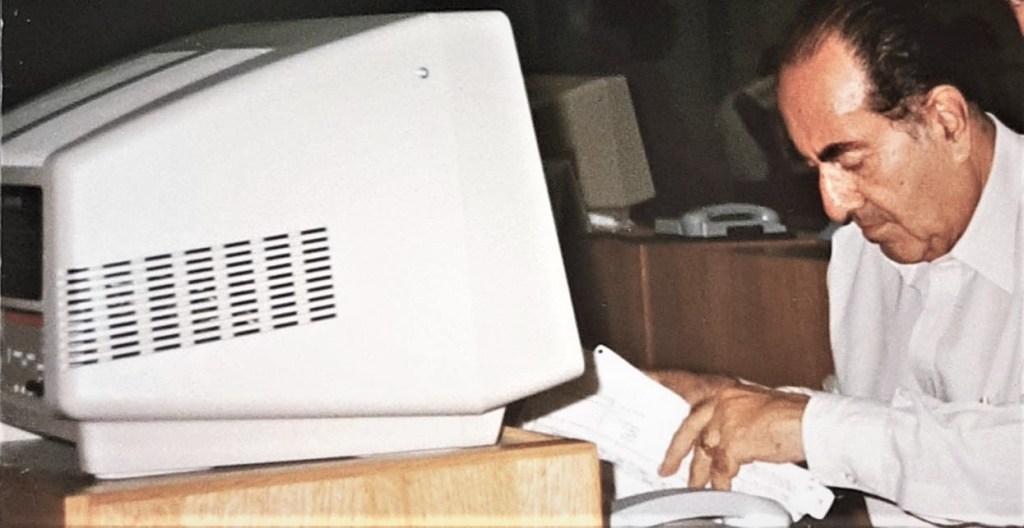
Respected 73 y.o. stockbroker Alec at the office – S’pore, 1987 (he loved his PC too!)

Dear ladies, relying on one person to secure your financial future and/or burying your head in the “it’s all too hard” box is not an option – especially in these economically uncertain times.

Men: this goes for you as well. Responsibility of managing money must be shared or at the very least explained to your partner who doesn’t want to be “involved”. Broken relationships, unexpected illness or death can result, and the other partner might be made homeless or be scrambling to make sense of paperwork left behind. 

You can learn basics of tax and investing!  

Unfortunately, there aren’t as many wise and honest stockbrokers these days like my father. But the good news is that we can do it ourselves with online trading platforms like CommSec. It’s simple to buy and sell shares on it, and easy to navigate too. You simply can’t miss the BUY and SELL click boxes! Research before you trade – and with a steady hand on the mouse, your confidence will grow and you’ll make sensible decisions. 

Ready to trade online?

  1. Get a Scrapbook

    What’s your goal? Is there more than one? Why and when do you want to achieve this? Write it down.

    What’s your dream? Write it down. Your goal needs to be strong enough to stop you frittering away your time on things you needn’t be doing at all. I knew my dream from age 8, and I still have my Scrapbook – I’ve never stopped cutting and pasting articles on shares in it. (My dream was to sing in a band, so I kept writing a list of songs I liked. I also wanted to be smart like Dad and learn about shares.)

    We do have time. In fact, lots of it. 
  1. Write a share-list of what you think will be the ‘next best thing’ in the future – and get their ASX codes.

    REMEMBER:  Investing is for the long-term
    . It’s too late when shares have already become a ‘trend’ (e.g. Afterpay), when prices keep rising and it’s too costly to buy. 
  1. Start an online trading account. If you’re unsure which, the Commonwealth Bank’s CommSec platform is a safe bet.  
  1. Start a watchlist of share codes of shares you like. Each code will have its own company info and updates. Annual reports should be the first thing you read. If you don’t understand what the figures mean, look at the profit, loss and turnover figures. Easy enough?
  1. Read, read, read. Subscribe online to The Australian, The Sydney Morning Herald (includes The Sun-Herald) and the Australian Financial Review. Later, I suggest you subscribe to a few newsletters from The Motley Fool, e.g. of the ‘Dividend Investor’, ‘Share Advisor’ and ‘Extreme Opportunities’. ‘Marcus Today’ is also good, and a useful guide to your existing stock picks.
  1. Observe. When you’re out shopping, what are the ‘BNPL’ (Buy-Now-Pay-Later) options advertised? Okay, maybe it’s too late for Afterpay, but there are still others under the radar doing well; you’ll see their names if you look for them when shopping.   
  1. Ask questions. Speak to your friends. What are they buying? Clothes, make-up, furniture, home appliances, computers, TVs? Is it online or from retail outlets? What are their best or best-avoided sellers? Behind each product is a company, and behind each company is an ASX code. 
  1. Network. Find 4 or 5 people that have an interest in stocks and shares. Get together whenever you can and brainstorm – it’s so much better than an online chat room! Start conversations. Expand your network. I got my best share and property tips from people I never knew before!
  1. Learn the terminology and acronyms. Here’s a list to start with: 

    Franking credits
    Ex-dividends & Cum-dividends
    Options
    Rights issues
    IPOs
    SPPs
    SAAS, IOT,  SMB, A1
    (new terms in annual reports for tech-based companies). 

I’ll stop now, your head must be spinning. Thanks for bearing with me. 

Invest 3.0 will have more ASX codes to research and one very important factor many financial advisers miss … PLUS the many mistakes I made which I want you to avoid!


Invest 1.0: Shares

INVESTING. S-c-a-r-e-d already?? 

Okay, it’s not only about stocks and shares – but in 1950s idyllic Singapore, it was the only thing Dad (and everyone we knew) was doing. Every morning from the time I was 8, I’d sit next to him, with his newspaper spread out on the dining table. He’d read aloud names of his rubber, tin and palm oil shares to me, and would listen to share reports on radio every weeknight. 

He went further – giving reasons why he bought them and why he knew they would go up in the future. “Dad will make lots of money to start his own business and Mum won’t have to go to work!”, he’d say.

At the time, ‘money’ and my mother not having to work held special meaning for me. My parents frequently argued about finances and Mum always looked tired when she got home late from the office. Yes, we had our devoted nanny (Ah Chai) to bathe, clothe and feed us – but I so wanted my mother there too. Dad’s vision appealed to me: I was interested and wanted to know more.  

Enid Blyton and singing in front of the mirror now took second spot after I started reading the financial page in Singapore’s Straits Times (I write ‘page’ because they had only one then), and later the Business Times. I don’t remember Dad reading anything apart from this newspaper and annual company reports. He told me it was important to read them and check on their income, profits and dividends (IPD). Losses are not necessarily bad he said, if the company was growing and expanding – but if income and turnover kept increasing without a profit, “Be careful!”

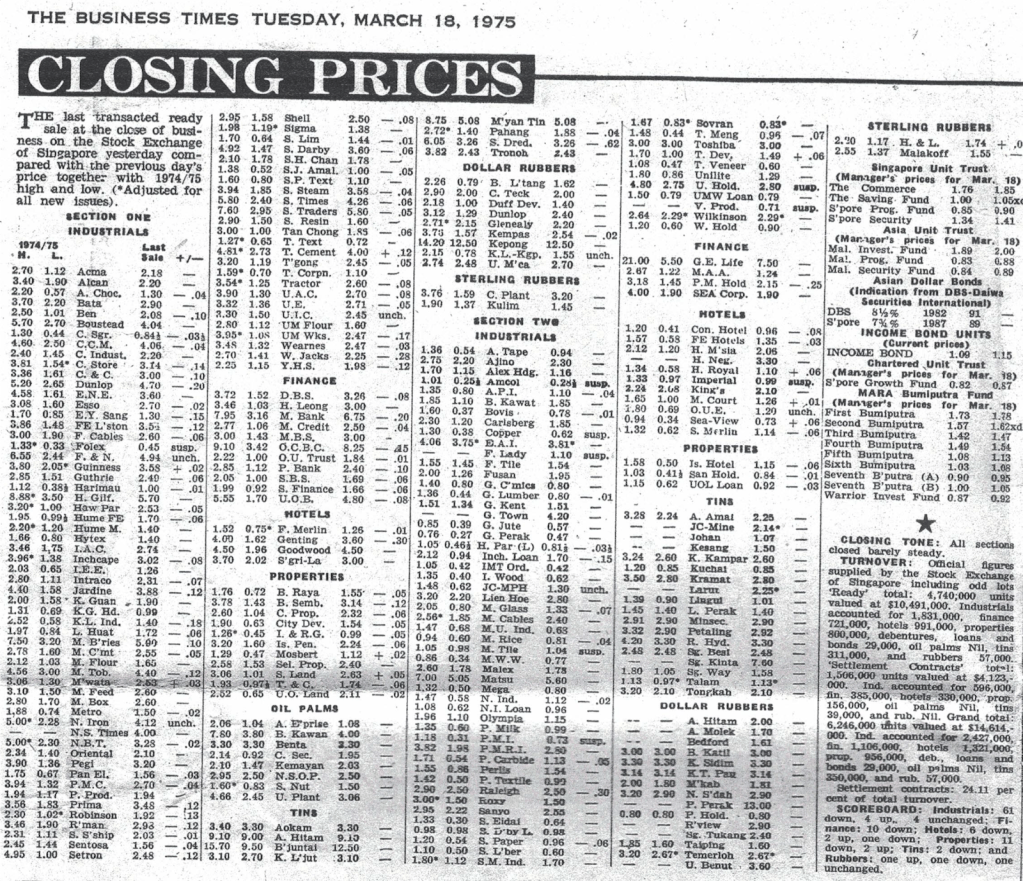
Closing share prices from Singapore’s Business Times, 1975 (my daily staple)

Our home slowly became what we now call a ‘chat room’ with one exception: food and people were included. Our live-in cook and maids diligently served and cleaned while Dad exchanged share-scrips (or the colonial term ‘chits’) with his clients. Some stayed for a meal, others sat and talked. I listened. I made notes. 

So that’s what I learned early on about the ‘secrets’ of investing. While I believe nothing much has changed, I encourage you to heed my father’s warnings so you’re well prepared. 

Moving forward to the 1980s … my ‘quiet’ years, compared to the bustle-buzz of my Singapore days. Adapting to my new life in Sydney, I had only(!) 3 goals: paying off the mortgage, starting a share portfolio and buying an investment property. Do you notice that all 3 were finance-related? What finance gurus preach now, I did then – no eating out, movies or shopping for things I didn’t need

I SAVED. 
I INVESTED TIME. 
I PREPARED.  

I already had a few ASX stocks in my portfolio by then, but needed more. I read newspapers but didn’t buy them – mostly because I snatched the loose business sections that people had thrown out in shopping centres!

But I did subscribe to the magazines Money and Share Investor. I now subscribe to The Motley Fool run by Scott Phillips. I also read Marcus Today, partly because I fell in love early on with Marcus Padley who just happened to give the same advice my father did … 

I picked apart the stocks recommended in the magazines and newspapers, highlighted and then wrote down what I liked in my ‘share book’. In 2 years, my savings were growing nicely and I would soon be ready to launch my portfolio. 

I  know that times are tougher now – it’s so much more difficult to buy an investment property than it was 20 years ago, especially here in Sydney, even with low interest rates. But here’s where shares come in: banks will be paying near-zero interest until at least 2024, so it definitely pays to do your research and build your portfolio.  

10 tips to start a share portfolio

  1. Get the necessary information about the companies, including their ‘IPD’: income, profit and dividends. 
  2. Have patience and courage to begin. 
  3. It’s OK to borrow money to buy shares (or a property) – but have enough for you and your family to live on, and don’t borrow so much that you can’t sleep well at night.  
  4. Never spend more than you earn. If you can’t pay off your monthly credit card balance, you’re spending too much. 
  5. Ask advice from those smarter than you, and take them out for lunch!
  6. Save regularly even if it’s a small sum – you’ll be rewarded.
  7. Never believe anyone who boasts of a ‘fortune’ they made on the stockmarket. They’re either exaggerating or lying.
  8. Choose value over cost. Don’t avoid shares simply because their price is too ‘high’. Buying 100 shares at $10 each may give you a better return than buying 1000 shares at $1! 
  9. What can you see that no-one else can?1 Take your eyes off your smartphone and look around you. 
  10. “If you’re good in this game, you’re only going to be right 6 times out of 10. If you buy only 1 stock, you’re essentially tossing a coin and that’s no way to invest!”2

We’re now entering the decade of 5G. Are you aware of how much it will impact our everyday lives? For example in health, agriculture, transport and e-commerce? Quantum computing, smartphones, electric cars – what do they need? Lithium, graphene, copper and nickel. Make a  list and pick 1 … or 2.

Please watch my previous ‘Let’s talk finance‘ snippet if you haven’t already.

Don’t be afraid to start. Focus. Time is your friend, don’t waste it. 

Finally, because I love linking my posts: IF YOU EAT BETTER, YOU’LL THINK BETTER! 

Stay tuned for Invest 2.0 out soon.

 1Padley, M. (November 8, 2017). The Sydney Morning Herald.

 2Phillips, S. (January 6, 2021). The Motley Fool Share Advisor [Scott Phillips quotes Peter Lynch].


Menopause

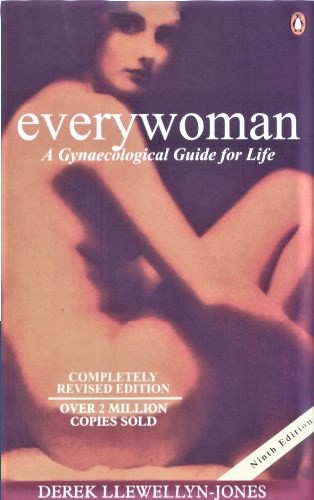
I first heard about menopause and osteoporosis in my early 20s. It was in a book called Everywoman by Derek Llewellyn-Jones, which my prudish mother kept hidden. I found it by accident and read the contents.  

‘At a time which is quite variable and individual for a woman, the remaining egg follicles in the ovary begin to disappear. This … occurs sometime between the 45th and 55th year of life. …

‘As the months pass fewer egg follicles are stimulated and the amount of oestrogen secreted by them diminishes still further, until the menstrual periods cease altogether. The menopause has arrived. … [T]his is a time of hormonal turbulence.’1

And: 

‘Hot flushes are noticed by at least three-quarters of women … other symptoms often attributed to declining hormones include depression, irritability, headaches, palpitations, dry skin, frequency of passing urine.’2

Llewellyn-Jones believed that those symptoms were not because of a lack of hormones but because of the need to adjust to being menopausal.

Osteoporosis

‘Women lose bone more rapidly than men, particularly 5–10 years after the menopause. The thinning of bones is called osteoporosis.’3

Right. So this was what I had coming to me? The price I had to pay for being a woman? Why didn’t Mum at least warn me?

But thinking of it now, how does a mother explain to her young daughter what she should be preparing for when she reaches 50?

Maybe I was different. I wasn’t into clothes, make -up and the usual feminine ‘things.’ All I wanted was to learn how to stay healthy, sing, write and be financially independent. At 20, I was already thinking of the future – mainly spelled out by slogans from my Dad such as ‘save’ and ‘buy shares. Health was the last thing on my list – until after I turned 30, when I was first drawn to the books of Dr N W Walker. 

As it turned out and discussed in Move! 2.0, I had premature menopause at 36. I knew osteoporosis would cripple me if I didn’t take steps to prevent it

In reality, would young, beautiful, vibrant women today even believe they should be preparing now for this ‘thing’? I think most would google ‘menopause’ or ‘osteoporosis’ and then promptly scroll back to their favourite websites.

My early symptoms were: 

  • less frequent periods with longer intervals between
  • insomnia
  • rapid heartbeat
  • frequently dropping things
  • dry skin
  • brittle hair without body
  • general lack of interest in life.

One night after months of tests, totally discouraged and frustrated without any conclusive diagnosis given, I sat on the floor crying, wishing, praying, and hoping I’d find an answer.  

The answer came the next morning.  I remembered what I had read 14 years ago, and asked my doctor for a blood test to check my  FSH (follicle stimulating hormone) levels. I already knew what the result would be: yes, it was menopause. I was just too young for this! 

The somewhat encouraging words from my doctor were: ‘No more children, Shirley – but at least you have your son.’ I sat on a park bench and cried some more.  

The disturbing images of old age I had growing up in Singapore flashed before me: I now fully understood. The men and women who couldn’t get up from their chairs, who gorged, didn’t exercise, smoked, drank and sat all day. They only looked forward to heart disease and diabetes. 

In Move! 3.0 I wrote on how HRT restored my life again. But I knew I couldn’t depend on that alone. It was Diet, Exercise, and Relationships. And I had to work on all 3.  

HRT plus

I keep returning to this topic because I’d like my female readers to avoid the pitfalls I met. 

My first question is: is it the true fountain of youth it’s made out to be?

Many friends have suggested that it’s a substitute for exercise. They tell me: ‘It’s alright for you – it’s HRT that’s giving you energy!’

But HRT alone does not build bones and muscles or release endorphins. It can also make you put on weight.

If not for Dr Walker’s diet, eating more calcium-enriched foods and sticking to my food combinations, I would have easily piled on the kilos over the years. It was also years of walking, my mat home-exercise and more recently, the regimen of a structured weights/aerobic circuit class at the gym. 

It was HRT,  my DIET and EXERCISE that saved me from osteoporosis. 

I also found HRT’s effectiveness diminishes with age. When the time comes to stop taking them (around 75 years) I want to walk away with confidence, still active and enjoying life – and not as a wobbly, crotchety old woman. 

So dear friends, please remember it is never just the one thing that gives results. It could be the foods we eat, friends we choose to have, or the way we think. With the right options, YOU are the creator and YOU are  in control. 

 1Llewellyn-Jones, D. (1971/1992). Everywoman: A gynaecological guide for life [6th edition], p.379. Penguin Books Australia: Ringwood, Victoria.

 2Llewellyn-Jones, p.382.

 3Llewellyn-Jones, p.388.


MOVE! 5.0

In my final Smart Moves piece, I’ll get straight to the point: START YOUR FITNESS PROGRAM. It’s never been so important. Aside from safeguarding our health, it’s also been found to build immunity – absolutely necessary in the current COVID-19 pandemic. 

Exercise + vaccine links

In fact, scientists say that a fit body can increase a vaccine’s effectiveness and reduce its side effects – already proven with the flu and HPV (Human papillomavirus) vaccines. Studies on the effects of exercise before and after a COVID-19 vaccine are still ongoing, but Associate Prof. Kate Edwards from the University of Sydney says similar results are expected.1 Isn’t that good news?

According to Edwards, ‘regular exercise … makes vaccine responses stronger and that likely then means you are more protected from the disease’. Her research says this does 3 things: 

  1. increases immune cells that guard the body, which destroy infected cells and make antibodies to kill viruses and bacteria;
  2. Releases myokine molecules, which alert the body’s defence system; and
  3. Strengthens the immune system over time and increases its response to infection.2

It markedly benefits older people. A 2019 study found that those who exercised regularly had an elevated antibody response to those who didn’t. Training on the day of a jab and afterwards are also believed to extend vaccine protection. Prof. Rob Newton from Perth’s Edith Cowan University says the exercise link with other vaccines (other than COVID-19 ones) is ‘so strong’, concluding:

‘The key is that exercise has no downsides. It gives benefits regardless … ’3

My formula

I have used dumbbells, kettlebells and barbells at my gym for nearly 4 years now – it has given amazing results even at my age (72). I’ve twice stopped myself from falling, and have the power to lift fairly heavy items without hurting my back. I walk even faster than I did 10 years ago. And combined with stretching, I no longer suffer bouts of sciatica which once crippled me for days. 

I recently discovered that balancing on each leg 30 seconds at a time with arms outstretched improved my balance and gave me sharper focus. Like strength, poor balance is a casualty of inactivity and age. As a bonus, the left and right sides of my brain are also said to benefit. Here’s my demo. It’s tough at first, but please persevere – you’ll be thrilled when you can maintain this pose for 30 seconds without toppling. 

A really good book on the power of strength training is The New Rules of Lifting for Life by American strength-coaches Lou Schuler and Alwyn Cosgrove. It’s an intelligent guide on using weights and your own body mass to build strength and power. It also devotes a chapter on single-leg strength exercises to improve balance. A review of the book cited 2 key phrases: ‘Decline is inevitable’, and ‘How fast you decline is up to you’.4 It is. 

GET EXERCISING NOW. Walk, jog, lift weights or even dance – if that takes your fancy. Don’t just endure it, enjoy it! And unless you have a reason not to, no excuses for not starting. But get your doctor’s all-clear first

If you have niggling back or neck pains or have had previous injuries, I do recommend you look at https://physiocise.com.au/ – where classes are run entirely by physiotherapists. A great resource which I use. 

So my new readers and Pearlers, what more can I say to get you to commit to a regular regime at the gym or fitness centre? You know you should. SO DO IT!

1Aubrey, S. (April 18, 2021). ‘Why exercising before getting a vaccine is a good idea’. The Sydney Morning Herald. Retrieved from https://www.smh.com.au/lifestyle/health-and-wellness/why-doing-exercise-before-you-have-your-vaccine-is-a-good-idea-20210415-p57jet.html

2  Aubrey, SMH.

 3 Aubrey, SMH.

Goodyer, P. (December 4, 2012). ‘Getting older? Get stronger’. The Sydney Morning Herald. Retrieved from https://www.smh.com.au/lifestyle/health-and-wellness/getting-older-get–stronger-20121203-2aqq7.html


MOVE! 4.0

I have found a wonderful fitness-home at Dirk’sHealth in Sydney. I feel more alive, and yes, more muscular than I’ve ever been. The gym has a great mix of men and women – including retirees, grandparents, business people and working parents. (But why are there still more women than men? This so disappoints me.) I’ve made friends whom I meet for coffee, and exchange ideas with other members too. We all support each other and have one goal in common: LIVE STRONG, STAY STRONG

You see, the social benefits from a (good) gym are crucially important too. What a bonus: we’re all not only looking and feeling better, we’re building social networks too – vital as we age. Feeling the way I do now, the classes I’ve been attending for nearly 4 years should give me an extra 10 years of quality living. Memory, motivation and momentum are at peak levels. This could be dangerous for someone my age, but I’m certainly not complaining!!

Please watch Dirk Hansen from DirksHealth give the nitty-gritty on cardiovascular, resistance and flexibility training.  

I’ve also personally found that HRT has become less effective as I age. When the time comes to stop taking it (likely at 75), I’d like to walk away with confidence, still active and enjoying life: not as a wobbly, crotchety old woman. 

So dear friends, please remember it is never just the one thing that gives results. It could be the foods we eat, friends we choose to have, or the way we think. With the right options, YOU are the creator in control. 

Men: Has your belly gone to POT?

A man with a beer-belly (a standard in Australia) is NOT a stunning feature. It shouldn’t be there. I’ve even seen it lately amongst men in their 30s. Please read my first post in Diet & Your Colon, ‘What are you eating??’ (if you haven’t already). 

I know many of you work as couriers, cab drivers or truckies. That means a lot of sitting and eating fatty fast foods like meat pies or burgers, and drinking anything but pure water. And you’re most likely overweight (if not obese) as a result. 

A job’s a job but there are ways to cut your sitting time apart from hard exercise. ‘Why we should sit less’ from the British NHS says it well.  

SNACK TIPAlmonds with either dates, dried figs or apricots are good combinations to snack on while you’re on the road.  Almonds and dried apricots are rich in calcium, and dates are high in natural sugars – much better than any candy bar. And all are rich in fibre.

I know Australian blokes in particular love their RSL (Returned & Services League) clubs. Why not join gyms there, rather than spending your free time swilling grog? Local community centres also offer various activities, from walking groups to fitness classes. Please do whatever it takes and sign up for at least 2 classes or activities a week.

GENTS: Now’s the time to take EXERCISE seriously and do something about it. The longer you wait, the harder it is to start a regular exercise habit. 

Your two other major health risk factors are alcohol and smoking. This Smart Moves section focuses solely on exercise; suffice to say you should reduce your alcohol intake and stop smoking entirely. The NHS in the UK provides some sober warnings for you: 

MEN AND WOMEN: Have you heard of the ‘apple shape theory? It’s when surplus weight is between your chest and hips, and it’s when you become prone to heart trouble. If you don’t commit to reducing your carbs, fats and salt to any form of regular exercise, I don’t like your chances of reaching 50 without insulin, beta-blockers or worse. 

Australian health writer Paula Goodyer quotes endocrinologist Dr Daniel Chen in her 2012 article:

‘Visceral fat (fat around the waist) secretes inflammatory chemicals that contribute to heart diseases and diabetes. Fatty acids are also released and end up being stored in the liver and muscles which makes it harder to keep blood sugar levels down.’1

An excerpt from Dr Norman Lazarus’ book, ‘The Lazarus strategy: How to age well and wisely’, says: 

‘Ageing is not a disease, and the diseases of ageing have little to do with genetics. The real problems are social and lifestyle.’2

Professor Lazarus was 84 when he wrote the book, and a veteran long-distance cyclist. He affirms that exercise is vital for our physical and mental wellbeing and the magic bullet when it comes to ageing well. 

SUMMARY: EXERCISE can prevent dementia, osteoporosis and all the other diseases that ‘old’ people get. Please check out a gym, fitness or pilates studio near your home or where you work. It saves on travelling time and is much more convenient

If all this is too daunting for now, then just WALK 30 MINUTES DAILY, 3 to 4 days a week. Done first thing in the morning, it’s a wonderful way to start your day. Even this simple exercise will make you happier. The endorphins (the ‘happy hormone’) stored in your pituitary gland come to life after a brisk morning walk or an hour at the gym. And read (and re-read) my post ‘Move! 1.0’ in Smart Moves

Together with a healthy diet, exercise will keep your weight in check. Orthopaedic surgeons will survive without you. And at 90, you’ll still be able to get up from your chair after you’ve finished your crossword and/or Sudoku!

 1 Goodyer, P. (November 10, 2012). ‘An issue of storage’. The Sydney Morning Herald.

 2 Rose, H. (August 11, 2020). ‘Norman Lazarus reveals how to stay fit at 80’. The Australian.


MOVE! 3.0

It’s now 1999, and I’m 50. My move-regime was by now complete: daily hill-walks, mat exercises (sit-ups, push-ups, pelvic lifts), and even newly acquired, relaxing tai-chi. 

I managed to keep my weight – but for some reason my tummy had begun to bloat and I’d lost some of my usual vitality. While family problems at the time didn’t help, I was quite sure the cause was physical. 

I saw my gynaecologist, and had an MRI which showed nothing unusual. He suggested I try a testosterone implant and estrogen/progesterone patches. This seemed to work, and I lost the bloat. I slept better, had my energy restored (so much so I exhausted my friends!) – but also found I felt close to normal even when the implant wore off. 

‘Physiocise’

I was working full-time, and needed regular physiotherapy to treat my neck and back. 

The now familiar catchcry ‘Occupational Health and Safety’ was unheard of in the 1980s and even up to the early 2000s – most workstations were not set up ‘ergonomically’ as they are now. I had to sit on awful chairs and use desks which didn’t accommodate computer keyboards. I was frequently on the phone, resting the handset on my shoulder, neck bent to one side for long periods. No wonder that I suffered chronic low back pain and locked neck muscles!

I applied Dencorub nightly, parked my hot water bottle under the sheets and took a pill containing pseudoephedrine (a common drug for nasal congestion). The pills helped me relax, ease the pain and eventually sleep. I didn’t know they were addictive. To my horror, I endured a week of hallucinating and breaking out in cold sweat when I was forced to get off it. (The drug is now prohibitive, dispensed only under prescription.) 

After that ordeal, I vowed never to take painkillers again. I took comfort only with my heat rub and therapy. The pain would go in the morning, but would gradually increase during the day. 

I saw a team of great physiotherapists (including Maria King who appears in my Physiocise video), who treated me when I would rush to their practice every fortnight. They got me through the days when the pain was at its worst. Results were almost immediate, but unfortunately only lasted a week to 10 days – after which the dull ache became pain again. 

Looking at my x-rays, the physios were consistent with their advice: “Shirley, come to our Pilates classes – your posture is bad, you need to get it assessed and fixed. You can manage this pain with the right exercises.” I didn’t heed their advice, and thought continuing with physio was easiest for me. Besides, I was also able to have a short nap as I lay under the heat pad during therapy … 

I really didn’t have the time for another exercise load. Working full-time during the day, I was also building a business network and share-portfolio in the evenings. So I bought a pair of 3kg weights instead, and used them on the weekend on top of my standard mat drill. I worked on my posture, but don’t think I won. I did however later join a Pilates class and felt good for it, but didn’t continue.

It was only in 2016 when I first retired from work that I got serious and joined a gym. I felt better in 6 months, and developed strong leg and back muscles. My core strength (which I thankfully maintained with the weekly home exercises) improved even more. Better stability and posture eased the chronic neck and back pain I suffered for years, and I could now stand for much longer in the kitchen. I was shown how, by stretching, I could get rid of my muscle spasms – even sciatica – almost immediately.  

Friends, I encourage you to take more proactive action to fix something similar that could be totally treatable without medication.    

We have so many options today. Many organisations partner with fitness studios and gyms to give discounted memberships. Places offering Pilates, stretching and muscle toning with qualified practitioners are abundant. 

But get professional advice from a physiotherapist first, or request an x-ray if you’re in pain. 

My physio Kate continued to help with my tight muscles right up to 2016, when I had my first go at retirement. And you know what? I tripped twice on uneven footpaths. Luckily, my wrists (strong from years of orange-squeezing) broke my fall. Oh, how my joints and muscles felt that impact! It continued for many weeks, and I had yet more pain to add to my list.

I realised that with age, my thighs, knees and calves were not strong enough to keep me stable if I lost balance. I thought again of my youth in Singapore, seeing ‘old’ people struggling to walk or get up from their chairs, clutching their knees.

Bone mass & osteoporosis: The facts

According to the American National Institutes of Health (NIH), ‘peak bone mass’ occurs up to the late 20s for both men and women. But:

From age 30, women lose little mass – until a few years after menopause, when bone loss accelerates. This commonly leads to osteoporosis. It is suggested that genetics, determined by gender and race, affects up to 75 percent of a person’s bone mass, while environmental factors (e.g. diet, lifestyle and lack of exercise) affects 25 percent.

While men start with greater bone mass than women, this declines in their 30s, when bone loss exceeds formation. Men in their 50s do not suffer the same rapid loss as menopausal women, but by 65 or 70 both lose mass at the same speed. Calcium absorption also drops in both sexes.2

So, men: the big ‘O’ also includes you

Twice as many men as women die from post-operative complications (e.g. chest infections and heart failure) in the first year after a hip-fracture. This is true even if men are a few years younger than women.3

The NIH lists the following important genetic and environmental risk factors which can increase the likelihood of osteoporosis: 

  • smoking
  • being thin or having a small frame
  • family history of the condition
  • early menopause and loss of menstrual periods
  • long use of asthma, thyroid, lupus and seizure medications
  • poor calcium intake 
  • lack of exercise
  • high alcohol consumption.4

Okay, so we all lose lean muscle and bone as we age – but we also commonly gain fat to boot. But do you know what’s missing? It was not until my late 60s that I realised what it was: MUSCLE STRENGTH

That dogged (now that I reflect on it) solitary hour I spent on the mat at home for so many years helped, but just wasn’t enough now. I needed expert supervision to guide me in my quest to build some brawn

A decision was made: I would find a gym that would cater for a 68-year-old without a stitch of lycra in her wardrobe. But no deafening music, sweaty bodies or shouty mic instructors please!

I tried two fitness centres; both had caring, knowledgeable trainers. I picked the one closest to home – DirksHealth in North Bondi, Sydney. The gym had a small group of lovely men and women, mainly aged 55 and over. What’s more, I could bring my own playlist!  

I signed up, and never looked back.   

In Move! 4.0, you’ll read first-hand the huge gains I made to strength, overall fitness, wellbeing, and HRT/diet-monitoring to get the calcium I needed. And I didn’t overdo the supplements.

National Institutes of Health. (2018). Osteoporosis: Peak Bone Mass in Women. Retrieved from https://www.bones.nih.gov/sites/bones/files/pdfs/osteopeakbonemassinwomen-508.pdf

National Institutes of Health. (2018). Osteoporosis in Men. Retrieved from https://www.bones.nih.gov/sites/bones/files/pdfs/osteopinmen-508.pdf

3 Kannegaard, P.N., Van der Mark, S., Eiken, P., & Abrahamsen, B. (2010). Excess mortality in men compared with women following a hip fracture. National analysis of comedications, comorbidity and survival. Age and Ageing, 39, 203–9. Retrieved from https://academic.oup.com/ageing/article/39/2/203/40731

 4 National Institutes of Health. (2018). Smoking and Bone Health. Retrieved from https://www.bones.nih.gov/sites/bones/files/pdfs/smokingbonehealth-508-12-18.pdf


MOVE! 1.0

EXERCISE. What is it exactly? 

Light years from the glitzy money-spinner the industry is now, it was so simple in my day. Growing up in Singapore, it started with ‘Go and Play!’ For girls, it was hopscotch, skipping and racing each other up and down footpaths. In secondary school, it was over an hour weekly of netball, badminton or ping-pong. The boys played tennis and soccer, or lifted the old iron weights to look like Schwarzenegger. It seems there always was a body-image link – even Dad confessed to taking up bodybuilding as a teen because he was too … ‘puny’. 

Remember the earlier tales of my dreamy childhood? Wait, there’s more. 

Our parents would often take us to lovely tropical beaches like Changi (yes, near the infamous prison) on Sundays. Again, FOOD was the universe, not the invigorating exercise of swimming itself – but the balmy salt-air and our dainty dips still made us ravenous. Curries, fragrant rice, fried noodles, sautéed fresh vegetables and pickles were kept hot in Tiffin carriers. We sat on bamboo mats on the sand, relishing every minute, warm winds caressing our bodies as we gorged …

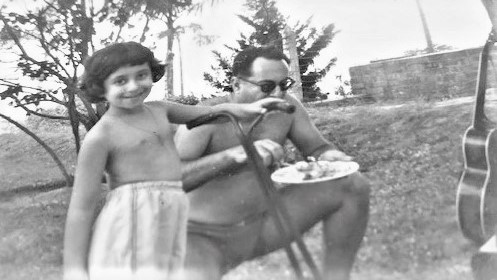
I’m with my foodie Dad at a S’pore fishing/swim spot, 1950s

But sadly, those calm, safe waters didn’t tempt us to learn swimming at all. We were always terrified of putting our heads underwater and not breathing. I didn’t learn how to until I was 21. 

Here’s the thing. To really take fitness seriously (or anything of value), there has to be at the very least a DESIRE – or better still, an actual NEED. I had a fear of deep water. I didn’t trust Dad or any of his friends to ‘teach’ me, as all they wanted to do was lift me up and throw me in the sea!

Now I had a need, a desire and a purpose. I simply had to build lung capacity to help me succeed as a singer. I wanted it so badly I lost the fear of putting my head underwater. It brings to mind the words of novelist Paulo Coelho, and it’s a principle you can use in all aspects of your life:

‘When you want something, all the universe conspires in helping you achieve it … making a decision is only the beginning of things – when you make a decision, it is like diving into a current which will take you to situations you have never dreamed of.’1

I only recently read Coelho’s book, and at once recalled my firm decision to learn swimming. How apt his words were!

Plunging those depths

I found a qualified swim instructor and had my first lesson at the shallow end of a pristine pool at a sparkling Singapore hotel. Mr Wong knew I was scared – but he was kind, extremely patient and I trusted him enough to lead me halfway across after my first few sessions.  

Graduating from leg-kicks, with arms outstretched shakily clutching the edge of a kickboard, I could after a while comfortably float, put my head underwater, and slowly make it to the deep end. My elation rubbed off on my sister and brother, and they too learned to swim with the rock-secure, Zen-like Mr Wong.

Conquering my first major fear raised my self-esteem and confidence to the skies. I could hold singing notes for longer (I vocalised Thus Spake Zarathustra!), had more energy, and felt joyously invigorated and relaxed after genuine laps of freestyle. No more toe-dips or wading in, nervously avoiding jellyfish; I now swam 3 times a week. 

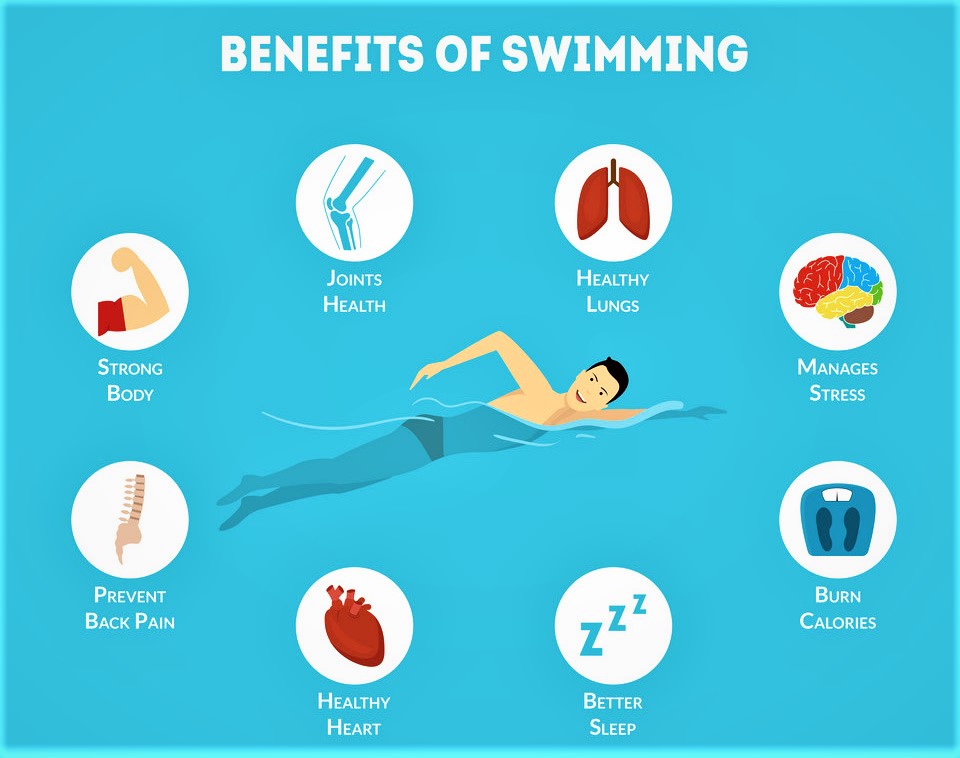
Let’s see the HUGE benefits of this exercise: 

I couldn’t help but look again at the familiar mahjongers and over-indulgers around me – still slouching on armchairs, refusing any exercise, including walking. They had the time, but not the will; they simply didn’t know (or maybe didn’t want to). It was a hop-in-hop-out affair from their chauffeured cars to more sag-sitting at work, at home, or at gluttonous hawker food centres.

I continued to swim until I was 34, when I had my first child. Now with a baby, I was on my feet most of the day, climbing up and down stairs at home. I’d never lifted, carried, bended or knelt so much in my life! I ached, and my muscles strained to do things I’d never done before.    

But did those stairs improve my fitness much? NO. On a particularly crazy day, my heart raced faster than usual. Was there something wrong with me? My GP just said, ‘Shirley, you’re just UNFIT!’

How could that be? I was following Dr Walker’s food combos as best I could, my stomach was back to normal after giving birth, and I was active enough at home. I felt OK. So why was I ‘unfit’? 

I had to hear the rest of the doctor’s words: 

‘You need to exercise, keep your body moving for at least 30 minutes a day until you begin to feel hot. That will get your heart pumping. It won’t race as much as you become FITTER.’

That word again. 

Okay, that sounded reasonable. I could start walking. The next street to mine was a little over 1km with a 40° gradient. A good place to start. I didn’t even make it a quarter of the way up. Puffing and panting, my legs leaden, I couldn’t do another step. I gave up and went home.  

But I persisted. Each day I walked a little more. It took nearly a month to reach the top of that painful road and down again in 45 minutes. I got hot and stayed warm for the next hour, which felt lovely in winter. By then I was hooked. Windy, humid, cold or rainy, I did it 6 days a week for 30 years. I now do 25 minutes on the same track! 

I realised that walking first thing in the morning helped me manage work and life. Going up the hill I would meditate, the blue sky and trees giving me the respite I badly needed from everyday cares. My rigour even earned me praise and admiration from colleagues and friends; ‘You’re so disciplined!’, they’d say. 

I could now for the first time actually deal with all the usual stresses and more. As a payroll officer, I had to handle demanding people, (wo)man the phones, and appease furious staffers over their pay complaints and accusations. But I got to calmly enjoy the challenge of explaining complex things, mediating disputes and reassuring people. I’d sometimes dash to the kitchen to make a cuppa for those most distressed, and I’d go home feeling satisfied and happy to help in some way. 

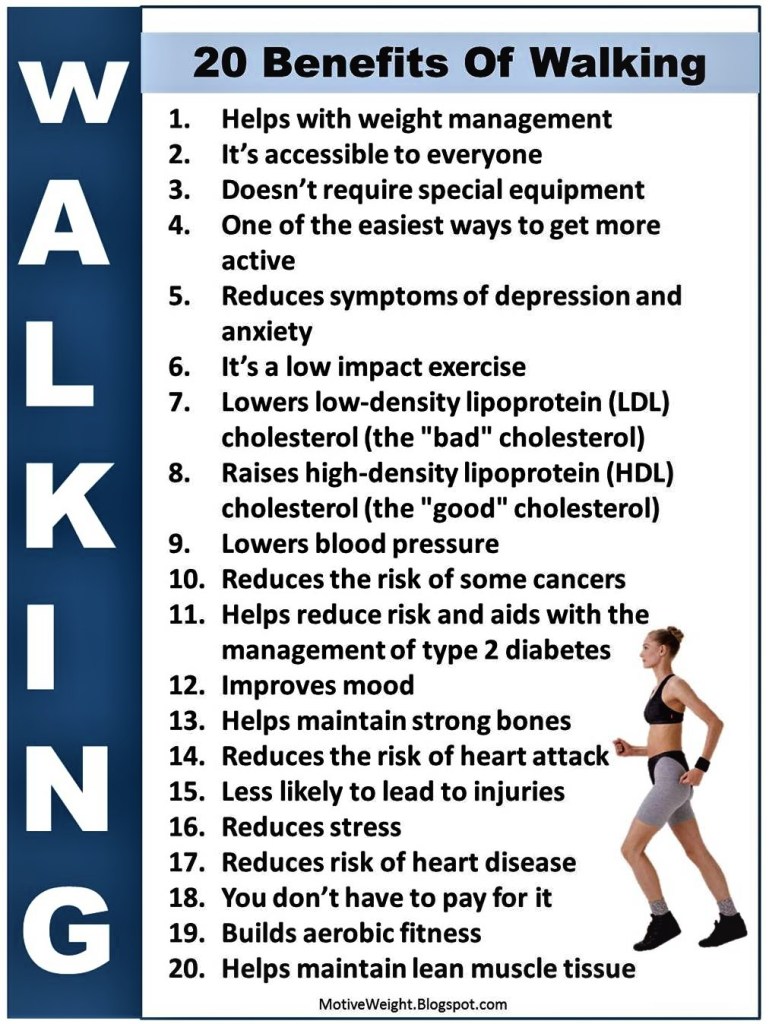
All in all, the simple act of walking (plus hill) became a real blessing to me. It’s something you too can start with if you’ve not actively exercised before. It helped me through good days, bad days, cheery and down days. Read the inestimable rewards of walking from the National Heart Foundation for yourself, and please also look closely at this summary chart: 

But doesn’t life invariably seem to fling us harder challenges? 

As you’ll see in Move! 2.0, I was diagnosed with premature menopause at 36. I learned I was sorely deprived of life-giving estrogen for well over a year. But I know for certain that without those strenuous incline treks, my bones would have gone downhill a lot quicker. 

I truly hope this will encourage you to make swimming, walking or both a part of your initial MOVE! 1.0 challenge.

1 Coelho, P. (1994). The Alchemist, pp. 42, 71. HarperCollins: San Francisco.