False health-ads

Social media influencers and businesses wanting more ‘traffic’ are mostly to blame. They enlist digital media agencies offering SEO (Search Engine Optimisation) to ensure their ads rank highly on Google. The more they pay, the more often their ads appear on search engines. They capitalise on our most common health problems, such as urinary frequency, heartburn, indigestion, bloating, constipation, and thinning hair – touting mega-dose vitamins. exotic herbs and plants to boost cognitive function. It’s so easy to be tempted.

Dr Jen Gunter, gynaecologist and author, comments on the internet’s power to normalise masses of information fed into it that’s often widely incorrect. She believes we need to be internet literate:

“We all take the first three hits off Google and if we don’t get what we like, we put a new search in. … There are times I recommend people take supplements. For iron deficiency, for example. But for wellness, I found that you can make a fortune with zero effort. I looked at a very popular menopause doctor’s product and used the exact same formula. With a little money we set up a Shopify site, went to one of these who label companies to sell it to, and that was it. We did it so quickly but didn’t go through with it. Honestly it’s like punching a hole in the floor and seeing gold.”

(Farmakis, B. 2024, August 24. ‘Selling this is like punching a hole in the floor and striking gold’. The Weekend Australian Magazine).

Poet Sir Walter Scott wrote in an 1808 poem: “Oh, what a terrible tangled web we weave, when first we practice to deceive”. The tangled web metaphor aptly describes how misinformation and dishonesty can spread – and he must have had a premonition of the Tower of Babel advertising we see in this century.

  • A person in a white coat pops up on screen with a solution for prostate problems/cataracts/thinning hair/parasites/ugly toenails/tired eyes. You click and scroll for 5–10 minutes without mention of the wonder-product. And then there it is – a capsule, cream, a drink. This unique formula is only available through that website. Have a free trial, but first provide your credit card number (cancelling the payment is never straightforward!).

  • Dry mouth: There’s a moisturiser just for this. Enter the mouth sprays, lozenges, and dentist formulated chewing gum. Most of these add artificial sweeteners like xylitol. Fact: Saliva production increases when we chew and reduces when we’re asleep, in dry weather, heated rooms, and with medication. If you’re dehydrated, drink water and/or chew (an apple is perfect). I keep a glass of water with some lemon juice and spearmint beside my bed, and drink this if I’m up in the early hours of the morning.

  • Feminine washes: Basically a baby wash with a different label. Try Aveeno baby shower and shampoo – it doubles as a face wash.

  • Whole body odour protection roll-on/spray: If your body smells foul even after a daily shower or two and you’ve used super-deodorants, have a health check and full blood test. My guess is that your liver and kidneys may be causing the problem.

  • Fibre pills/psyllium/bran: If you’ve been relying on them for too long they will be difficult to give up. You could reduce the dosage by adding more raw vegetables like fennel, cos (Romaine) lettuce, an apple a day (eaten with the skin), and an orange or grapefruit with the pith. Make a habit of drinking more water: 1.5L a day will do a mighty job to gather up the fibre in your colon and help to form stools.

  • Creams for puffy eyes: Drink water, get enough sleep, reduce alcohol and salt. My ophthalmologist told me they’re fat deposits. Also consider seeing an eye specialist who also does plastic surgery – you’ll be free from puffiness for up to 10 years (keep your eye creams – they’ll do what they’re meant to do, i.e. hydrate and protect). 

  • Creams for wrinkles and fine lines: These by and large hydrate and protect – but collagen inevitably breaks down with sun exposure, and wrinkles appear with age. Try exercising for better circulation, and eating collagen-rich foods like salmon skin and chicken cartilage.

Longevity expert Dr Luigi Fontana stresses the importance of the right diet for vitality and health of our skin” and to delay ageing:

“Cherries, blueberries, blackcurrants, strawberries, apples and pears are low-glycaemic fruits rich in vitamins and phytochemicals that possess skin-protecting properties.”

Fontana, L. (2020). ‘The path to longevity: How to reach 100 with the health and stamina of a 40-year-old’, p.125. Hardie Grant Books: Richmond, Victoria.
About 10 days in to Doucleff’s experiment, she noticed a striking shift: She wasn’t constantly thinking about food”
(Extracted from Doucleff’s article cited above. Her book, Dopamine Kids: A Science-Based Plan to Rewire Your Child’s Brain and Take Back Your Family in the Age of Screens and Ultraprocessed Foods, will be published by Avid Reader Press in 2026.)

UPFs have dire effects, according to Dr Dariush Mozaffarian of Tufts University, Massachusetts, who links their consumption to heart disease, obesity and diabetes. Science journalist Michaeleen Doucleff trialled a month without UPFs with her family – and noticed a marked improvement to health. Their diet now included “oatmeal, plain yoghurt, fresh cheeses, beans, nuts, canned fish, popcorn, fruits and veggies, fresh and frozen”. The desire for “snacking duly plummeted” (Doucleff, M. 2025, August 30. My Family Went Off Ultra-Processed Foods for a Month. The Results Surprised Us. The Wall Street Journal).

These target our most common health complaints and we all take them – but they are not an insurance policy against bad eating habits. Mega doses? The body uses what it needs and then flushes the rest out. Don’t give your kidneys more work! Vitamin deficiencies are determined with a blood test. Listen to your body and get health checks and full blood tests yearly or sooner if required.

Fatty bellies

I remember the days when it was considered healthy to fill up your plate. Not going for seconds made some think you were ill!

Many women notice an increase in belly fat as they get older, likely due to a lower level of oestrogen; I noticed this with my female work colleagues who were going through menopause in their mid-50s. Their weight gain was obvious, but they were sadly unaware that one of the causes was a drop in their hormone levels.

This was in the early 2000’s when menopause was still not talked about, and women were left to figure out what to do about it. Notably, older men are especially susceptible to carrying extra weight between the chest and hips – those beer-bellies we’ve all seen. 

By that time, I had already been on HRT for over 15 years. Together with a good diet and exercise, oestrogen made it easier for me to control my weight. My endocrinologist suggested taking low-dose testosterone with my HRT. It was remarkable how much energy it gave me – but it also increased my appetite. I so loved dessert. After a rice-laden meal, I’d discreetly unzip my jeans to make room for a cake I’d bought at the local bakery. Eventually, my size 8 jeans had to be upsized to a 12. Panic set in … size 12 would soon become uncomfortable … would 14 be next??

No more, I said. It took a year of unyielding resistance and the bewilderment of my friends to flatly refuse dessert after meals. Giula Enders’ book Gut has an interesting chapter on sugar:

“ … we know them as the carbohydrates we find in bread, pasta or rice … the final product is the same number of sugar molecules as a couple of spoonfuls of refined household sugar … the only difference is that household sugar is already broken down into such small pieces when it arrives in the small intestine that it can be absorbed directly into the bloodstream. ...

Sugar is the only substance our body can turn into fat with little effort.

Enders, G. (2015). Gut, pp.48 & 50. Greystone Books Ltd: British Columbia, Canada.

During COVID, we frequented confectionery aisles, buying muffins, croissants, and cakes, and trawled through social media recipes just for that sugar hit to see us through lockdown. And of course, there was wine with dinner. Please remember that all this sugar, including soft drinks, wine, snacks and processed foods – even the so-called ‘zero sugars’ in stevia and aspartame – cause belly fat. It’s no wonder that many emerged with larger waistlines post-pandemic. Having lost motivation, many of us didn’t go on 15-day quick-loss diets or pound treadmills.

I disciplined myself to maintain my walking regime, returned to the gym, reduced my rice portions and took a sentence from Dr Walker’s wise words:

… if refined sugar of any kind whatsoever, or any flour product in any form is eaten during the same meal with fruits (except bananas, dates, figs or raisins) either together or within an hour or two, the sugars and starches will have a tendency to ferment … ”  

Walker, N.W. (1940/1970). Diet & Salad, p.25. Norwalk Press: Summertown, Tennessee.

Peta Bee (December 6, 2023, The Australian) reported on a finding by Sydney’s Garvan Institute that a combination of calorie-dense comfort foods actually trigger changes in the brain that increase cravings for even more sweet and fatty foods. Our brains have now been programmed to crave calories in the form of fat and sugar. So let’s change the tape!

Author of the 1990s, Judith Wills, provides a list of ‘positive’ and ‘neutral’ foods:

  • Rolled oats, whole grain bread and honey to sweeten 
  • Salad vegetables and herbs (no dressing): celery, lettuce, fennel, parsley, basil, mint
  • All fruits especially citrus (I suggest you have fruits on an empty stomach 30 minutes before food)
  • Animal protein: eggs, cheese, yoghurt, oily fish, lean beef, veal, all poultry
  • Plant protein: tofu, peanut butter, lentils, beans, nuts (e.g. sunflower seeds, walnuts, almonds).
  • Cornflakes, white bread and white rice
  • Sweet biscuits and cakes (particularly sponges)
  • Soft drinks and high-salt foods (e.g. processed meats and cheese slices, tinned and packaged soups)
  • Anything labelled ‘ready to heat and eat’.

(Wills, J. (1990). A flat stomach in 15 days, pp. 32–38. Sphere Books Ltd: London.)

Note: Please read labels when buying canned fruit and vegetables; some brands (including those that are ‘organic’ – baked beans in particular) have higher sugar/sodium content than others.  

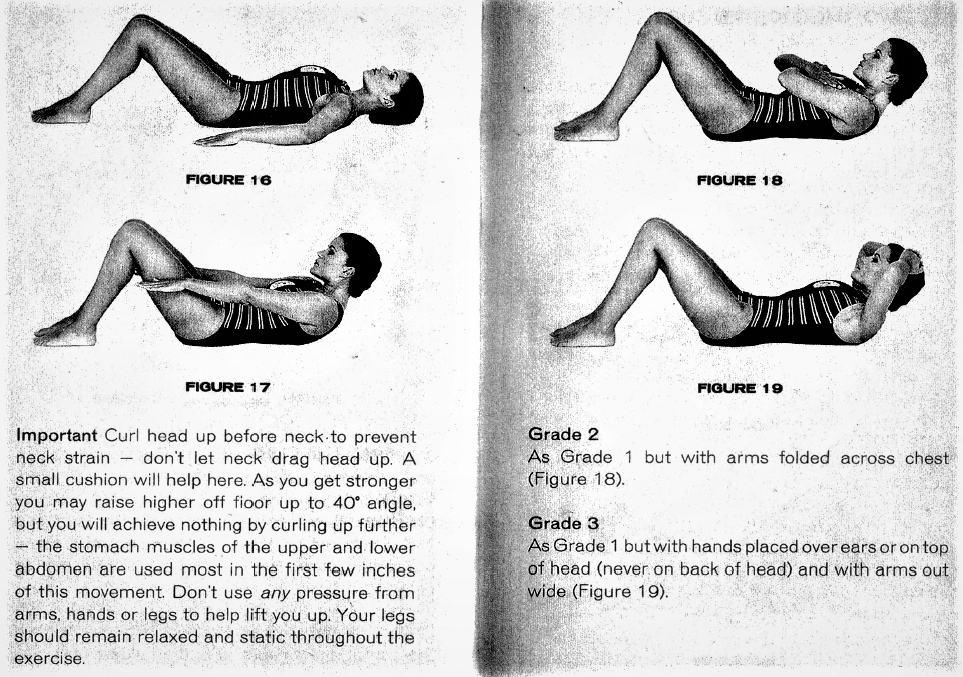
Judith Wills’ ‘Flat Stomach Exercises’ you can do at home: “Without strong abdominals your stomach will never really be flat.”
Wills, J. (1990). A flat stomach in 15 days, pp. 83–125. Sphere Books Ltd: London.

I did Judith’s stomach exercises for 30 years an hour a week before I joined a gym at age 67. For a book which cost $2, it was an absolute treasure!

Also remember: breakfast is important! Prof Christopher Gardner, a nutrition scientist at Stanford Medicine, California, says: “ … skipping breakfast would cause people to be hungrier, eat more and make poorer food choices later in the day” (Petersen, Andrea; 2025, May 1, The Australian).

(Raubenheimer, D. & Simpson, S. (2020). Eat like the animals, pp.18081. HarperCollins Publishers: Sydney.)


Menopause revisited

I was warned about osteoporosis. I had calcium-rich foods and walked 2–3km every morning before work; I also managed to fit in some Pilates after work. I paid closer attention to diets prescribed by Dr Norman Walker, whom I often write about – eating more raw fruit and salads, eliminating sugar, white bread, biscuits, and soft drinks. I became better at preparing my own meals and cooking in general. I eventually moved away from buying take-outs, and eating processed and fast foods (processed meats especially). 

My HRT also included a small dose of testosterone, which raised mood and energy. I had to watch my weight though, and gradually lost the 5kg I’d gained when first on HRT through diet and exercise.

In 2002, when work colleagues were showing signs of ‘change of life’ – with little battery-operated ‘menopausal fans’ on their desks! – I had already been on HRT for over 15 years. Most knew what was to come but none prepared for it. Unfortunately, also in 2002, HRT trial results from the Women’s Health Initiative in the US were released. It warned of a heightened risk of breast cancer, strokes, heart attacks and blood clots for women on HRT.

So for the next 15 years, HRT was demonised. Doctors stopped prescribing it and my workmates were given antidepressants and sleeping pills while they desperately searched for ‘natural’ alternatives. Of course, the supplement industry thrived. Vitamins B12 and D3, magnesium and calcium were added to preparations of Wild Yam, Black Cohosh, Dong Quai and Red Clover to make them seem like solutions. But did they work? To those I asked, the answer was NO!

I remained sceptical of herbal and vitamin treatments. Although my gynaecologist begged me to stop HRT, I continued with it. I believed the media did not properly investigate the reports – and specialist clinicians I spoke to agreed with me. And wouldn’t you know – a few years later, further research and analysis suggested those initial findings lacked important context about patient risk profiles. The trial was deemed flawed and wildly misreported.

The Australian Menopause Society now advises HRT is “safe to use for most women in their 50s or for the first 10 years after the onset of menopause”. Menopause treatment is at last having its Eureka moment, and there’s even a new name for it: MHT (Menopause Hormone Therapy). MHT is now associated with reduced risk of heart attacks, endometrial and ovarian cancer, and small decreases in the risk of dementia.

Then there’s the latest addition, ‘PeriMenopause‘: the “reproductive phase in a woman’s life occurring before the final menstrual period, or menopause”. It’s when we’re nearly there, but not quite, with signs that our hormone-secreting glands are unwinding – when we should be getting help to help us carry on with our jobs and social lives.

In her article “Why Everyone is Talking about Menopause Again”, Penny Timms writes:

” … it is important women equip themselves with sound advice so they enter this new phase of life full of knowledge and empowerment rather than fear and misinformation … it is also a special time to focus on you and your own happiness.”

(The Australian, 2024, 21 December. Timms quotes Prof Susan Davis from Monash University.)

Many women seem to sail through menopause well into their 50s – and see no need getting a thorough health check. But without oestrogen, the ‘banker’ of calcium, we lose bone mass (most rapidly between 5–10 years following menopause). Our body shape changes, lean fat deteriorates and belly fat accumulates!

They should all now be a part of your regular health screening health program if they’re not already. Please also include the gym if you can!

I stopped taking MHT at age 60 on my doctor’s advice, with the risk of breast cancer after this age. I was given ‘Tibolone’ instead – a synthetic hormone that mimics the effects of both oestrogen and testosterone. However, now at age 75, my GP cautions that Tibolone could cause strokes, even though I don’t meet any of the risk factors. I’ve also noticed its beneficial effects have waned over time. But she knows I will never stop it; she shakes her head and smiles while writing my prescription: “Shirley you seem to know what you’re doing … keep enjoying your life … “


Parasite lost!

It had me fooled in the beginning: I thought it was simply a stomach bug. I became suspicious. I wasn’t unwell, and was constantly ravenous. But what went in also went out – and in 2 months I had lost 5 kgs. 

My gastro-enterologist reassured me that my particular bug was “common and harmless”, that it would clear up on its own, and that he wouldn’t prescribe antibiotics. I was to see him again only if symptoms became “severe”.

I really wanted this bug gone. Five kilos was a lot to lose for me and I was worried. 

I looked online for herbal supplements; most of them specified a course of 2–3 bottles to effectively “kill” parasites – but reviews of the herbs’ side effects (e.g. vomiting and diarrhoea) put me off.  

Hope came from an article on, of all things, papaya seeds.

Not only are these seeds potent antioxidants, rich in fibre and monounsaturated fats, but their potent enzyme papain aids digestion by breaking down protein. Papaya seeds can also help fight infections and promote kidney health – and in some cases, may actually kill intestinal parasites

I have been eating papayas all of my life … but the seeds??

Well, they went into our home compost bin along with papaya skins. This is the very thing earthworm producers caution against – because papaya seeds are known to slow down earthworm reproduction and make them temporarily infertile. Worms love papaya skins and the gel around the seeds, but always leave the seeds alone. Now we know why!!

So I began chewing a teaspoon of the seeds with the fruit and had them fresh (they can be bitter; you may prefer to swallow them with a full glass of water as I do sometimes). You can keep the seeds in the fridge (preferably in an airtight glass container) for up to 3 days, if you’re not eating a fresh papaya every day. 

Unbelievably, I began to put on weight again and in 3 months regained the 5kg I’d lost. I don’t think my parasite has gone; the seeds more likely stopped them from reproducing. 

My morning regime now includes a teaspoon of those precious seeds. Next time you slice open a papaya, be sure to enjoy both the delicious flesh and the powerful seeds nestled inside – to take full advantage of the range of health benefits this remarkable fruit has to offer.  

Note: Pregnant women should steer clear of papaya seeds due to potential risks of inducing contractions. Individuals with allergies to latex or papaya should also avoid them. People with gastrointestinal issues or those taking certain medications should consult a doctor before consuming the seeds.